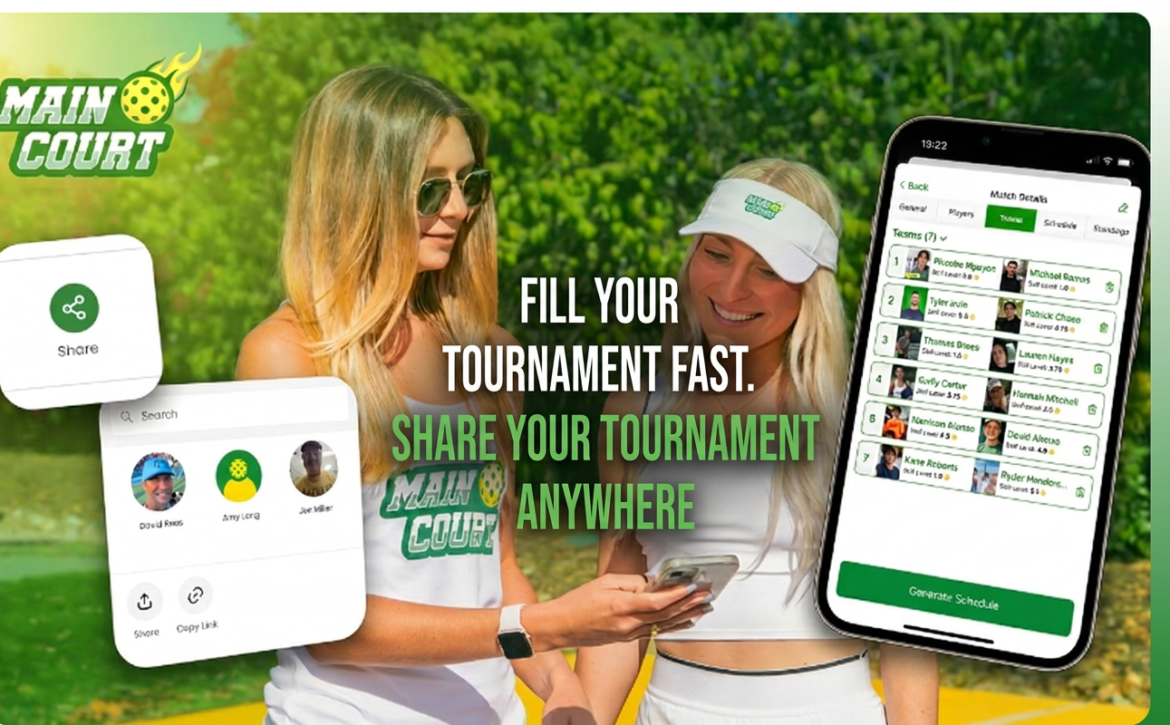
Increase Pickleball Tournament Registrations: 7 Methods
You spent three weeks planning the perfect tournament. Secured the courts. Designed balanced divisions. Organized the schedule down to the minute. Then you posted it on Facebook and waited.
Three days before registration closes, you only have 16 players signed up.
This scenario repeats across pickleball communities every week. Tournament organizers pour countless hours into planning, but skip the one step that actually gets players through the door: promotion.
Here’s the hard truth: creating a tournament is only half the battle. The other half—the part that determines whether your event succeeds or fails—is reaching the players who want to participate.
Why Tournament Promotion Matters (More Than You Think)
Many organizers treat promotion as an afterthought. But it’s not. Promotion is tournament management.
More registrations mean larger, healthier divisions. Healthy divisions mean better matchups, more engaged players, and ultimately, better experiences for everyone. Full tournaments generate more revenue, which keeps your events sustainable and allows you to run better competitions.
But here’s what most organizers don’t realize: empty divisions also create problems. When divisions don’t fill, players get frustrated. Withdrawals increase. Word of mouth becomes negative. The next tournament you organize starts with a disadvantage before you even announce it.
Successful tournaments aren’t successful because they have better brackets or prettier scorecards. They’re successful because organizers treated promotion with the same care they gave to planning.
The Problem: Players Are Everywhere
Here’s what makes tournament promotion hard: your players aren’t all in one place.
Some live in WhatsApp groups. Others are active in Facebook groups. Some get their event information through text messages. Instagram users see event posts. Email works for some. Club communities spread the word through their own channels.
Trying to reach all these different groups using the same method doesn’t work. You end up copying and pasting the same tournament link across five different platforms, hoping something sticks. You spend hours on marketing instead of organizing.
The worst part? Even when you do all that work, you still miss people. Players who don’t use Facebook miss your Facebook post. Players who check WhatsApp once a day never see your text.
The 7 Methods That Actually Work
1. Share With Existing Player Communities
Clubs, groups, and established communities are where players already gather. Post in those spaces first. These are your warmest leads.
2. Encourage Players To Share
Your players are your best marketers. Make it easy for them to invite friends. A single player can reach 50 people in their network—do that 10 times and your tournament is full.
3. Start Promoting Before Registration Opens
Build anticipation. Create buzz. Let players know a tournament is coming. Early awareness drives early registrations, which creates social proof that drives more registrations.
4. Keep Promoting Throughout Registration
Don’t stop after launch day. Continued promotion fills the gaps and catches players who missed the initial post. Reminder posts are not spam—they’re how you reach busy people.
5. Use Multiple Channels Strategically
Meet players where they already are. Text, WhatsApp, Facebook, Instagram, email—use the platforms your community actually uses. Different players prefer different channels.
6. Make Registration Simple
Reduce friction. The easier you make sign-up, the more registrations you get. Three clicks to register beats three pages of forms every time.
7. Leverage Social Proof
When players see that 30 other players have already registered, they’re more likely to join. Show registration numbers prominently in your promotion.
Why Word of Mouth Beats Paid Ads
Many organizers assume they need paid advertising to fill tournaments. They don’t.
Most successful pickleball tournaments grow through community sharing and player networks. When your friend tells you about a tournament, you listen. When an algorithm shows you an ad, you scroll past.
Word of mouth and player recommendations remain the most powerful forms of marketing in pickleball. Your job as an organizer is to make sharing easy, not to become a marketing expert.
The Manual Promotion Problem
Here’s where many organizers get stuck. They know they need to promote across multiple channels. So they:
- Copy the tournament link and paste it into Facebook, then Instagram, then WhatsApp, then email
- Type out tournament details separately for each platform
- Send individual text messages to key contacts
- Hope players share the event (but don’t make it easy)
- Spend hours on marketing instead of organizing
This approach wastes time and misses reach. There’s a better way.
How Modern Tournament Tools Make Promotion Simple
Tournament software should do more than manage brackets and scorecards. It should help you reach players.
The best platforms allow organizers to:
- Share tournaments with one click across every major platform
- Post events to player groups and communities directly
- Send tournaments through text, WhatsApp, Facebook, and email from a single interface
- Track which promotion methods drive the most registrations
- Enable player-driven growth by making it easy for players to invite friends
You don’t need special marketing skills. You need tools that eliminate the busywork.
The Main Court Advantage
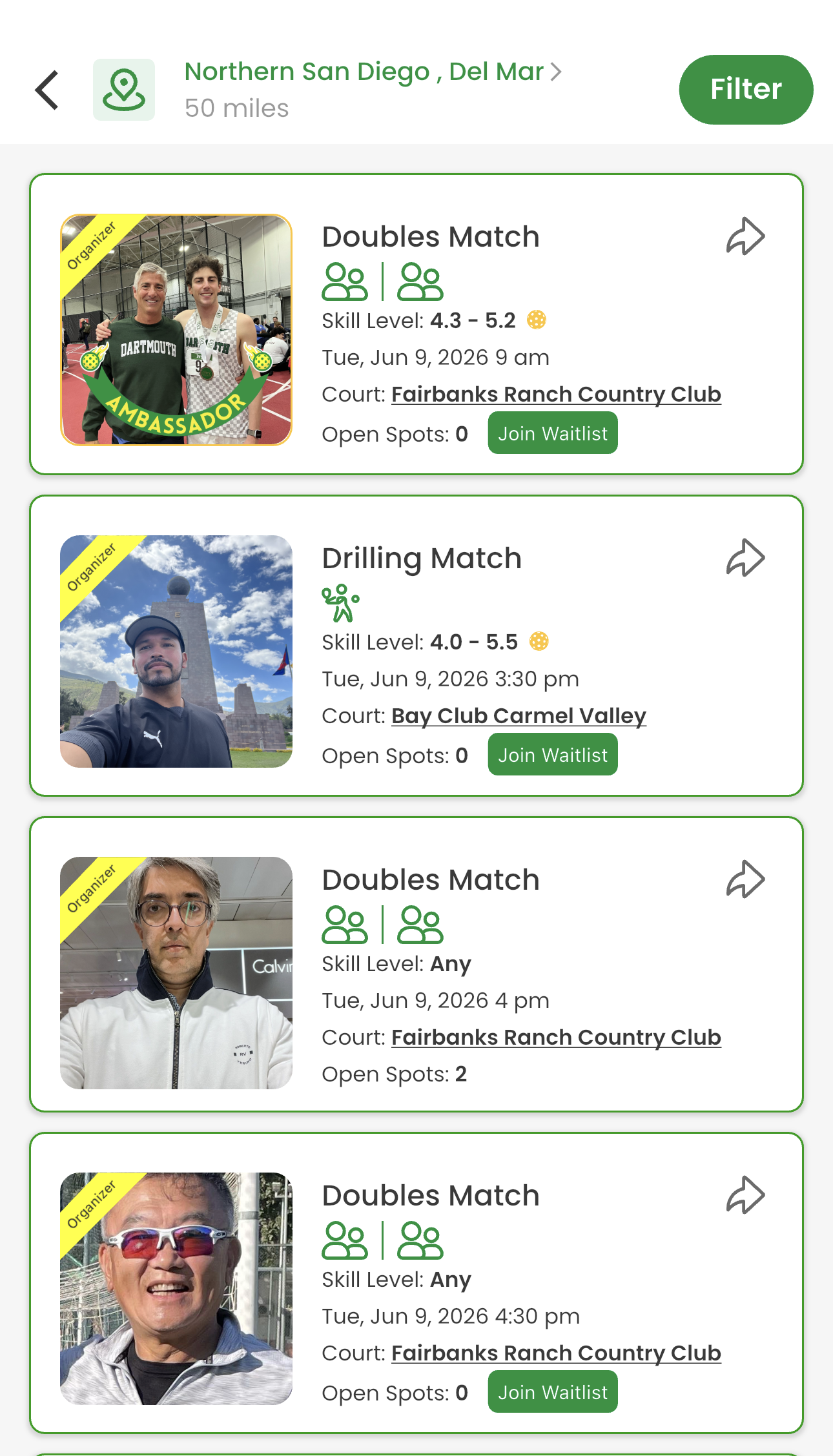
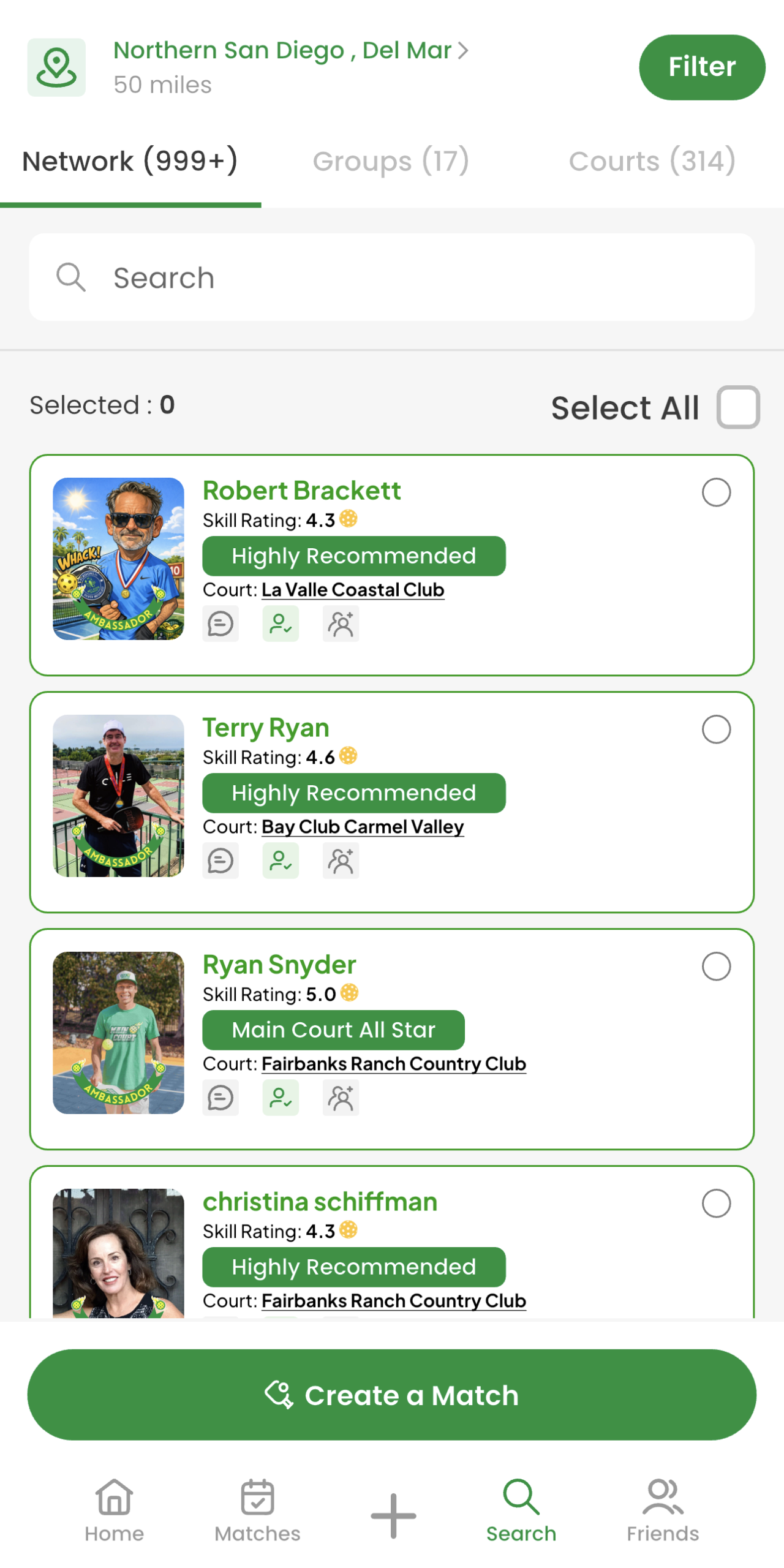
This is where Main Court changes the game for tournament organizers. With our easy tournament promotion and sharing tools, organizers can reach players wherever they already communicate—without doing the work manually.
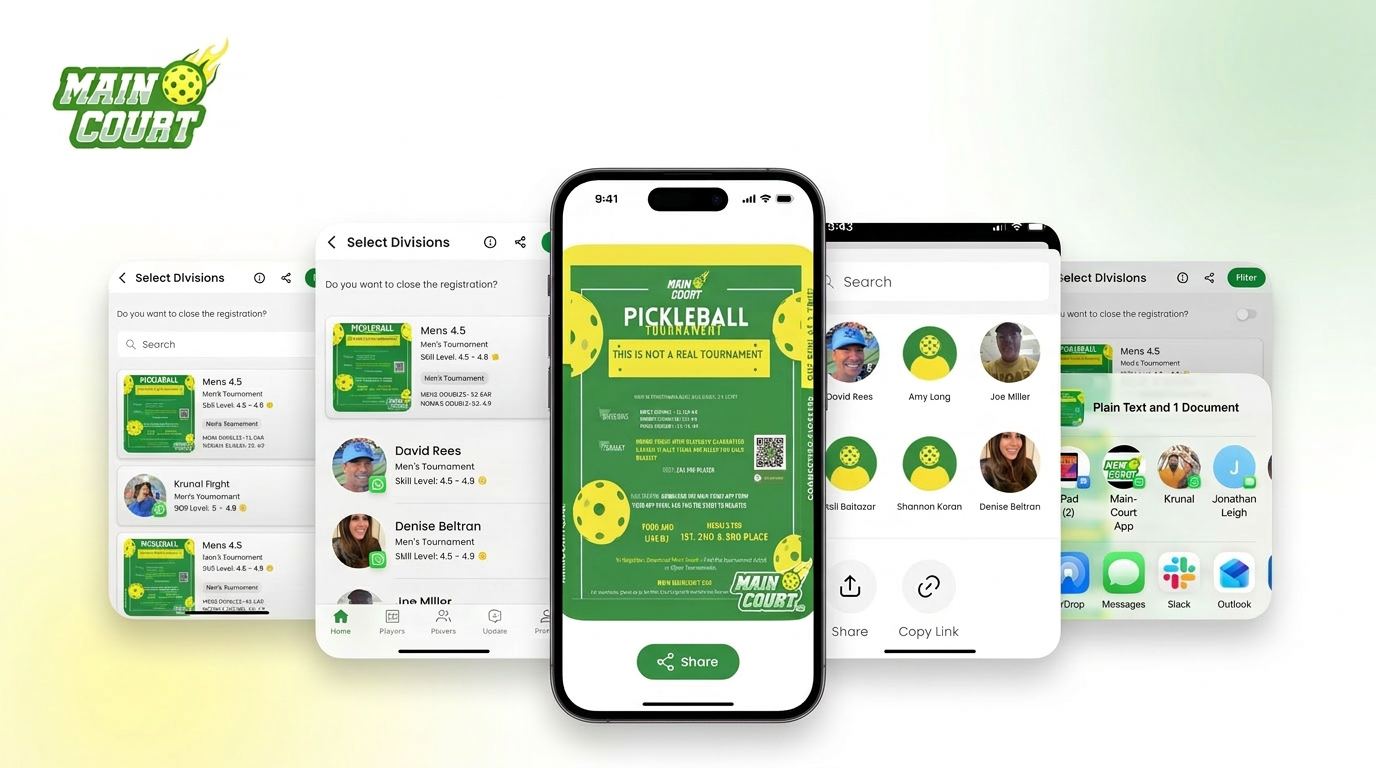
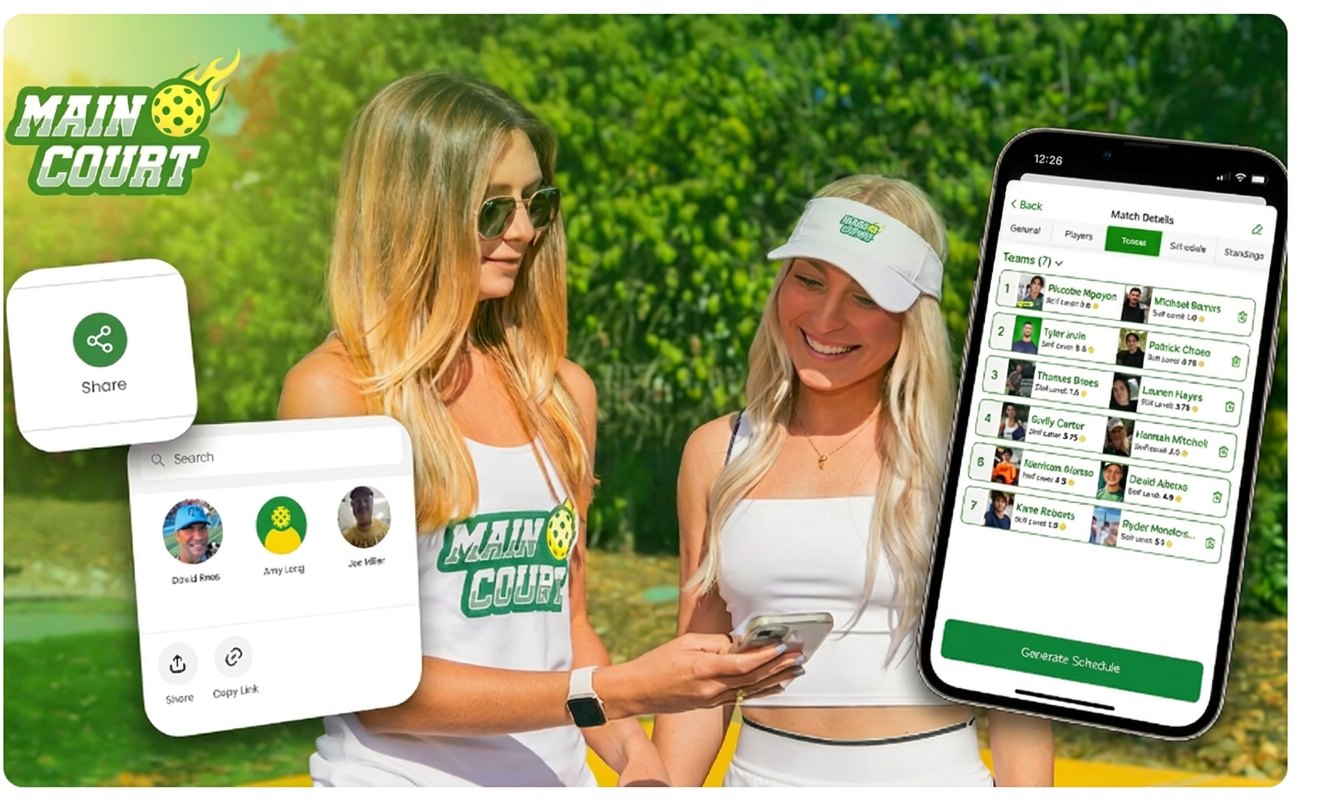
Create your tournament once. Share it to players, groups, the Main Court social feed, text messages, WhatsApp, Facebook, Instagram, email, Messenger, or any app on your phone. All from the same place. All with one tap.
No special skills required. No hours spent copying and pasting. No players missed because they don’t use the platforms you chose.
The result? More registrations. Fuller divisions. Better tournaments. Better experiences.
Manual Tournament Promotion vs. Main Court
| The Old Way | With Main Court |
| ✗ Copy and paste across 5+ platforms | ✓ Share with one click across all platforms |
| ✗ Type tournament details separately each time | ✓ Create once, share everywhere |
| ✗ Spend hours on manual marketing | ✓ Focus on organizing, not marketing |
| ✗ Miss players who don’t use your chosen platforms | ✓ Reach players wherever they communicate |
| ✗ Difficult to track what works | ✓ See which channels drive registrations |
| ✗ Players can’t easily invite friends | ✓ One-tap sharing encourages player growth |
The Bottom Line
Tournament software shouldn’t just run tournaments. It should help you fill them.
Because the best tournament in the world means nothing if nobody shows up. But a well-promoted tournament—even a simple one—will always outperform a perfectly organized event that no one knows about.
The easier it is to share events and reach players, the easier it becomes to grow registrations and create better experiences for everyone in your pickleball community.
Ready to fill your next tournament? Download the Main Court app today and see how much easier tournament promotion can be.
Want the full breakdown?
Download the Main Court app
Join thousands of pickleball players. Free on the App Store and Google Play.