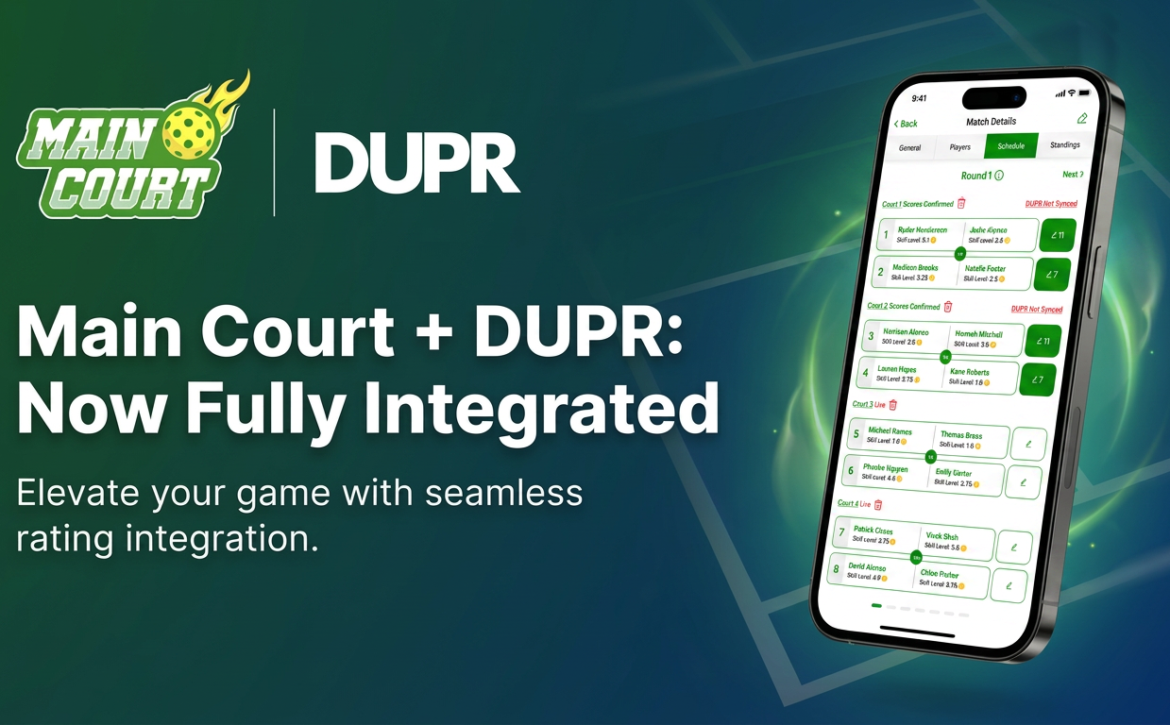
Main Court and DUPR launch a full integration — players can now see their DUPR rating inside Main Court, run DUPR-rated Round Robins, and automatically sync match scores to DUPR.
Round robins sound complicated—but they’re actually the fairest way to determine the best players in your group. With the right free pickleball round robin app, organizing one becomes simple: everyone plays everyone else once, and final standings are determined by total wins and point differential.
No single loss knocks you out. No waiting around for bracket play. But the execution—tracking all those matches, recording scores, calculating tie-breakers, and managing court rotations—is where most organizers either fumble or reach for a spreadsheet and a calculator.
Myth #1: Round Robin Scoring Is Too Complex
Here’s the reality: it’s not. The confusion usually comes from trying to do it by hand.
Every player competes against every other player in your group. Each match generates a winner and a loser. At the end, you tally wins and calculate point differential (total points scored minus points allowed). Ties are broken by head-to-head record, then point differential, then points scored. That’s it.
The three ways to score each match are:
Win/loss record – 1 point for a win, 0 for a loss (simplest)
Game-based scoring – Points awarded for each game won in a multi-game match
Point differential – Points for wins plus bonus points based on margin of victory
Most community round robins use the first method because it’s clear and fair. Courts rotate systematically—if you’re on Court A for Match 1, you move to Court B for Match 2, and so on—so no pair of players gets an unfair advantage or disadvantage.
Myth #2: Manual Scoring Is “Good Enough”
Maybe for a casual 4-person friendly. For anything bigger, it creates chaos.
Spreadsheets require someone to manually enter every score, recalculate standings after each match, and hunt down tiebreakers. One typo or missed entry derails the whole round robin. Players get frustrated when standings don’t update in real time. Organizers spend the entire event glued to a laptop instead of actually enjoying the event.
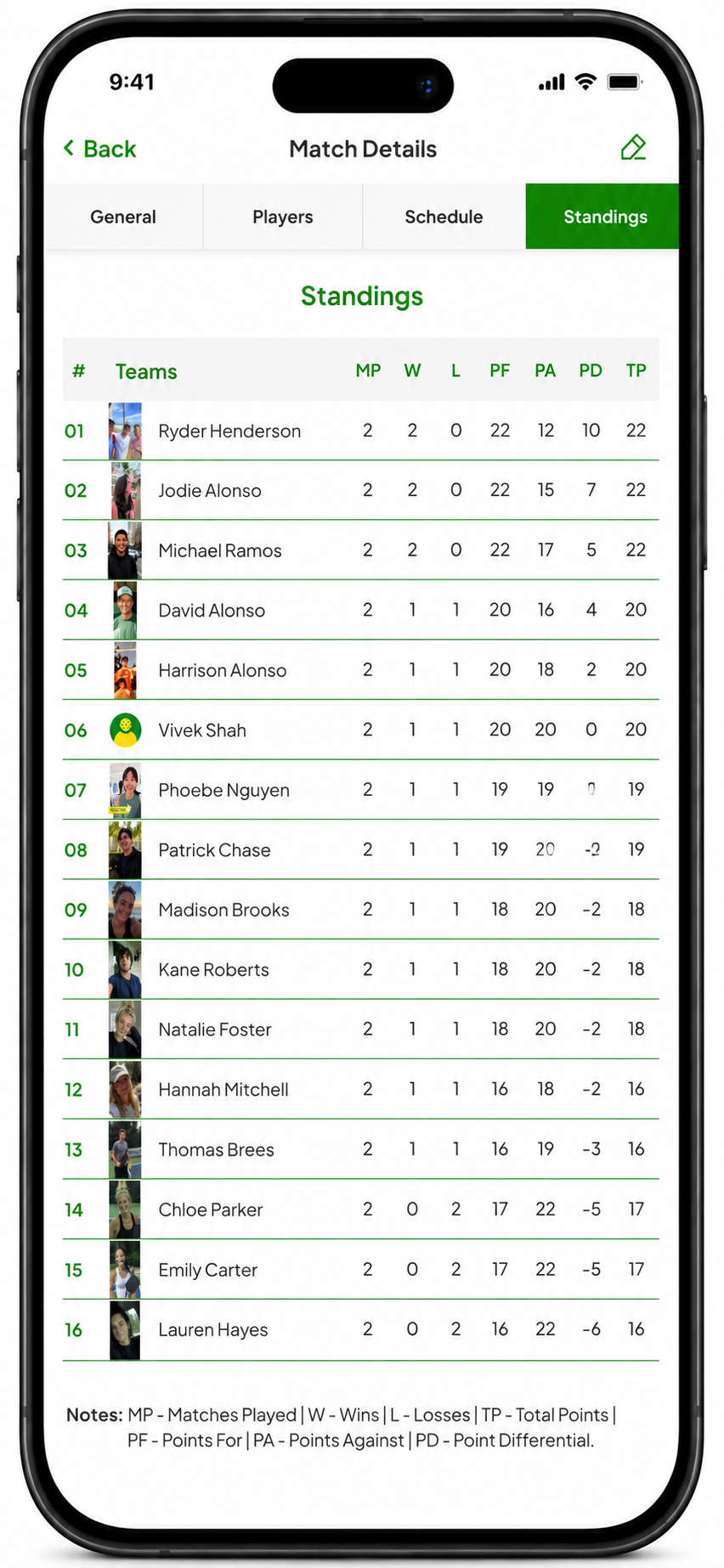
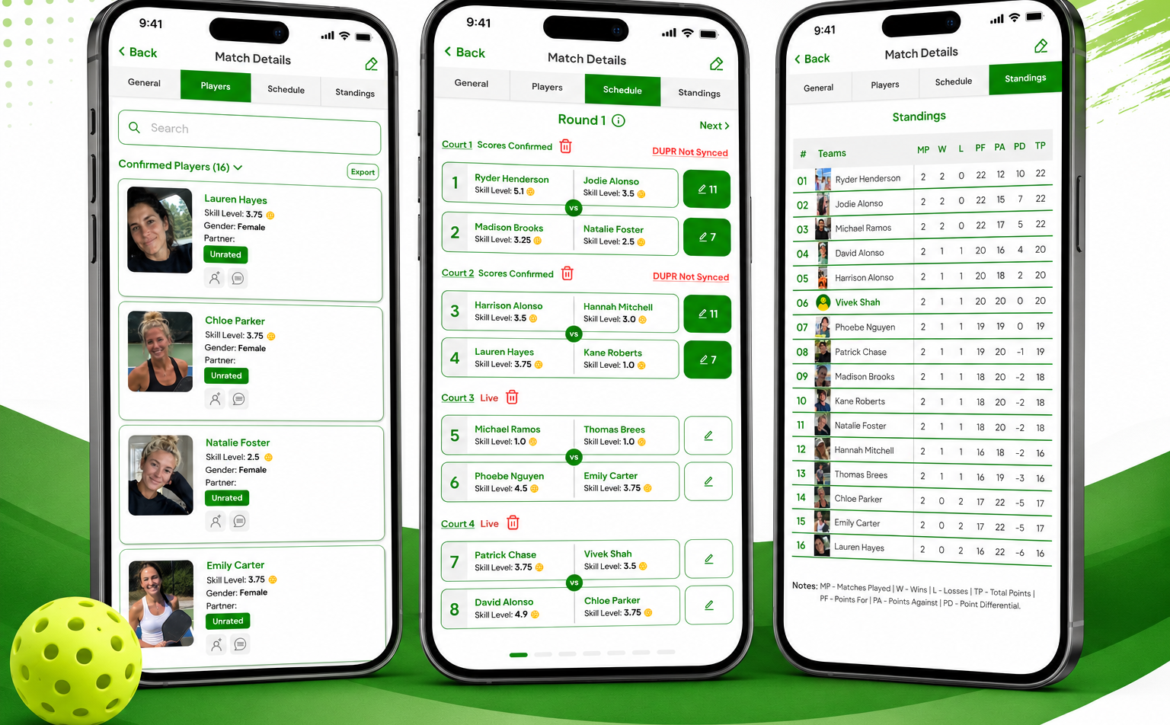
That’s why Main Court’s free pickleball round robin app handles the heavy lifting: every score is recorded instantly, standings update live, and tiebreakers are computed automatically.
When you set up a round robin on Main Court, the app automatically generates the match schedule, assigns court rotations, and displays the live leaderboard. Players see their next opponent and court in real time. Scorekeepers tap in results, and standings update instantly. No tie-breaker math, no confusion—the system handles it.
How many players can a round robin have? Theoretically unlimited, but 6–12 players per group is ideal—it keeps match count manageable and the event flowing.
What if two players end up tied? Tiebreakers apply in order: head-to-head record, point differential in head-to-head matches, total point differential, total points scored.
Can I use round robin for mixed-skill groups? Yes—use skill level assessment to ensure balanced groups, then run round robin within each group.
Round robins reward consistency and fair play—no luck, no bracket upsets, just the best players rising to the top. The only question is: are you going to manage it with a spreadsheet or let Main Court handle it?
Download the Main Court app and run your next round robin with zero manual scoring, live leaderboards, and happy players. It’s free.
You have eight players, two courts, and ninety minutes. Everyone wants real games against different people, nobody wants to stand around, and you do not want to play referee all afternoon. The format that solves all of that is the round robin, and it is the single most useful thing an organizer can learn to run.
You spent three weeks planning the perfect tournament. Secured the courts. Designed balanced divisions. Organized the schedule down to the minute. Then you posted it on Facebook and waited.
Three days before registration closes, you only have 16 players signed up.
This scenario repeats across pickleball communities every week. Tournament organizers pour countless hours into planning, but skip the one step that actually gets players through the door: promotion.
Here’s the hard truth: creating a tournament is only half the battle. The other half—the part that determines whether your event succeeds or fails—is reaching the players who want to participate.
Why Tournament Promotion Matters (More Than You Think)
Many organizers treat promotion as an afterthought. But it’s not. Promotion is tournament management.
More registrations mean larger, healthier divisions. Healthy divisions mean better matchups, more engaged players, and ultimately, better experiences for everyone. Full tournaments generate more revenue, which keeps your events sustainable and allows you to run better competitions.
But here’s what most organizers don’t realize: empty divisions also create problems. When divisions don’t fill, players get frustrated. Withdrawals increase. Word of mouth becomes negative. The next tournament you organize starts with a disadvantage before you even announce it.
Successful tournaments aren’t successful because they have better brackets or prettier scorecards. They’re successful because organizers treated promotion with the same care they gave to planning.
The Problem: Players Are Everywhere
Here’s what makes tournament promotion hard: your players aren’t all in one place.
Some live in WhatsApp groups. Others are active in Facebook groups. Some get their event information through text messages. Instagram users see event posts. Email works for some. Club communities spread the word through their own channels.
Trying to reach all these different groups using the same method doesn’t work. You end up copying and pasting the same tournament link across five different platforms, hoping something sticks. You spend hours on marketing instead of organizing.
The worst part? Even when you do all that work, you still miss people. Players who don’t use Facebook miss your Facebook post. Players who check WhatsApp once a day never see your text.
The 7 Methods That Actually Work
1. Share With Existing Player Communities
Clubs, groups, and established communities are where players already gather. Post in those spaces first. These are your warmest leads.
2. Encourage Players To Share
Your players are your best marketers. Make it easy for them to invite friends. A single player can reach 50 people in their network—do that 10 times and your tournament is full.
3. Start Promoting Before Registration Opens
Build anticipation. Create buzz. Let players know a tournament is coming. Early awareness drives early registrations, which creates social proof that drives more registrations.
4. Keep Promoting Throughout Registration
Don’t stop after launch day. Continued promotion fills the gaps and catches players who missed the initial post. Reminder posts are not spam—they’re how you reach busy people.
5. Use Multiple Channels Strategically
Meet players where they already are. Text, WhatsApp, Facebook, Instagram, email—use the platforms your community actually uses. Different players prefer different channels.
6. Make Registration Simple
Reduce friction. The easier you make sign-up, the more registrations you get. Three clicks to register beats three pages of forms every time.
7. Leverage Social Proof
When players see that 30 other players have already registered, they’re more likely to join. Show registration numbers prominently in your promotion.
Why Word of Mouth Beats Paid Ads
Many organizers assume they need paid advertising to fill tournaments. They don’t.
Most successful pickleball tournaments grow through community sharing and player networks. When your friend tells you about a tournament, you listen. When an algorithm shows you an ad, you scroll past.
Word of mouth and player recommendations remain the most powerful forms of marketing in pickleball. Your job as an organizer is to make sharing easy, not to become a marketing expert.
The Manual Promotion Problem
Here’s where many organizers get stuck. They know they need to promote across multiple channels. So they:
Copy the tournament link and paste it into Facebook, then Instagram, then WhatsApp, then email
Type out tournament details separately for each platform
Send individual text messages to key contacts
Hope players share the event (but don’t make it easy)
Spend hours on marketing instead of organizing
This approach wastes time and misses reach. There’s a better way.
How Modern Tournament Tools Make Promotion Simple
Tournament software should do more than manage brackets and scorecards. It should help you reach players.
The best platforms allow organizers to:
Share tournaments with one click across every major platform
Post events to player groups and communities directly
Send tournaments through text, WhatsApp, Facebook, and email from a single interface
Track which promotion methods drive the most registrations
Enable player-driven growth by making it easy for players to invite friends
You don’t need special marketing skills. You need tools that eliminate the busywork.
The Main Court Advantage
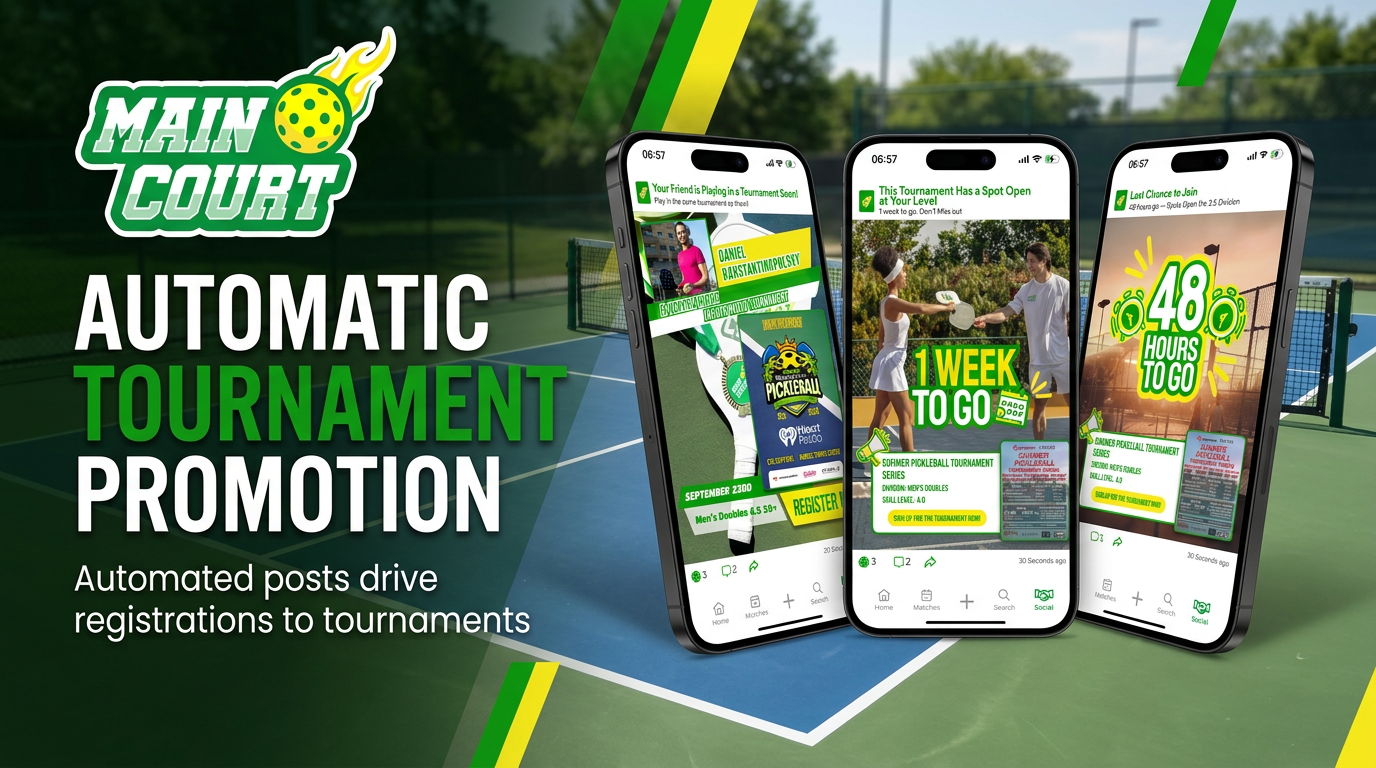
This is where Main Court changes the game for tournament organizers. With our easy tournament promotion and sharing tools, organizers can reach players wherever they already communicate—without doing the work manually.
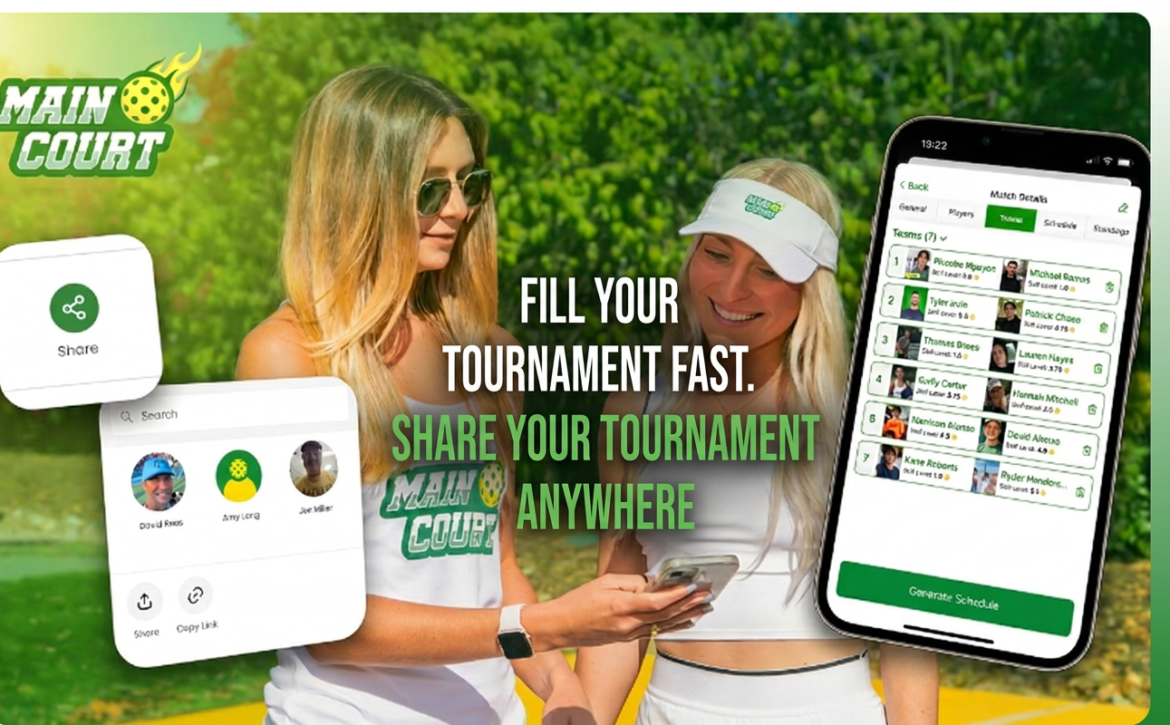
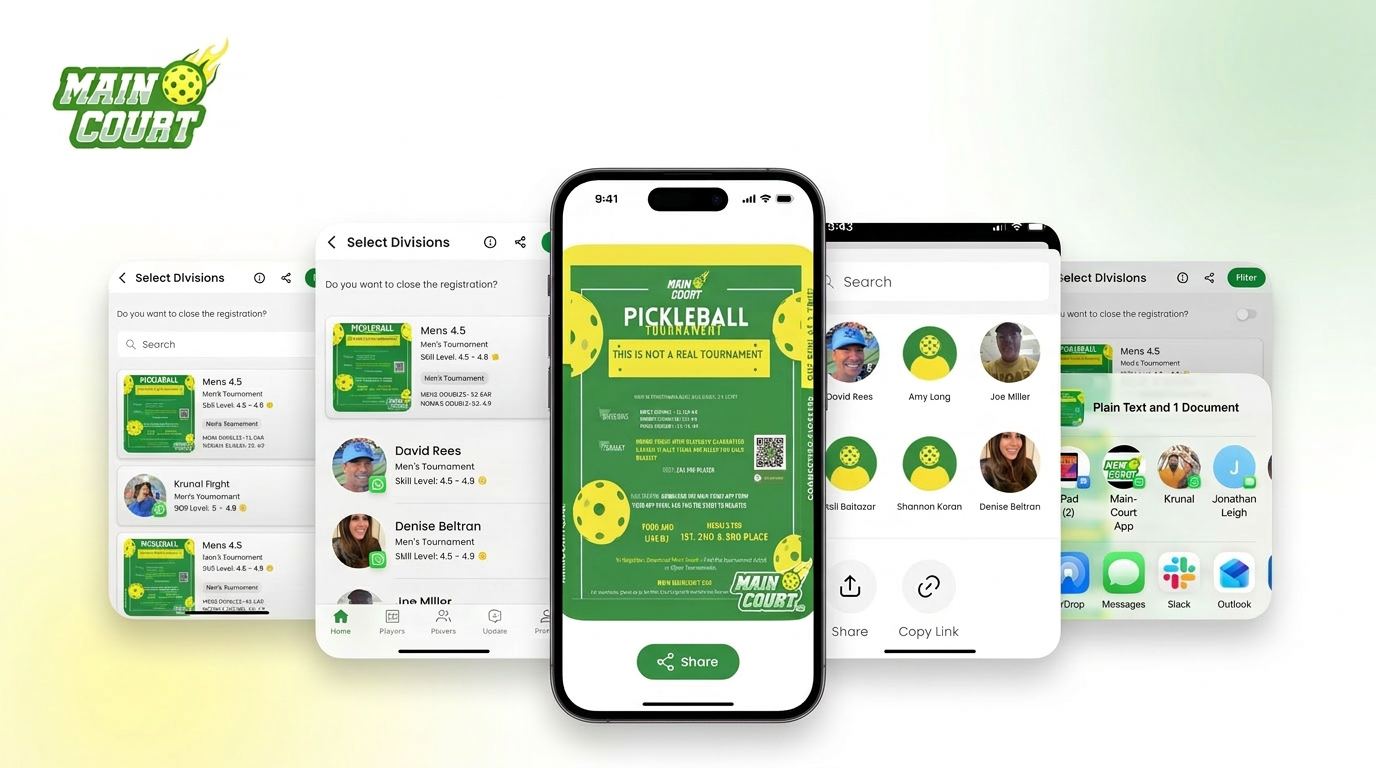
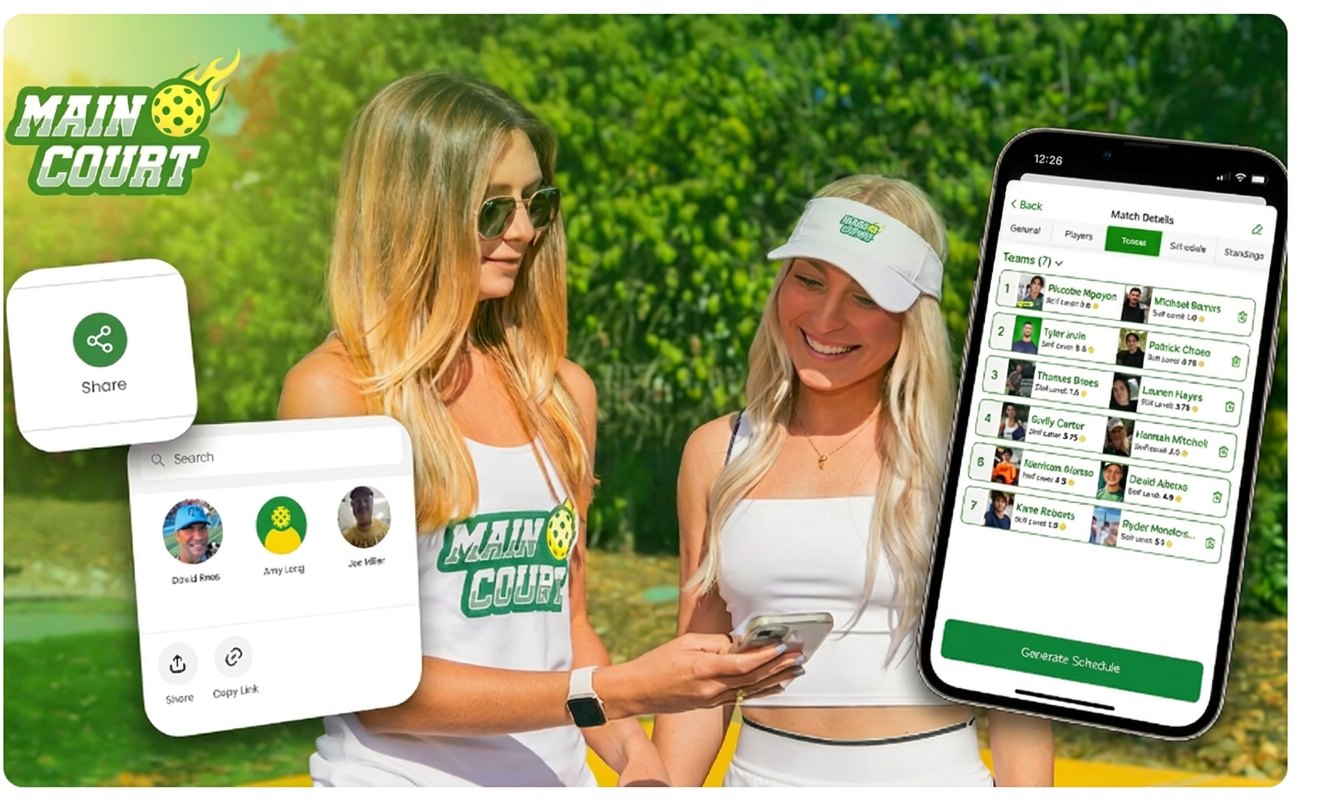
Create your tournament once. Share it to players, groups, the Main Court social feed, text messages, WhatsApp, Facebook, Instagram, email, Messenger, or any app on your phone. All from the same place. All with one tap.
No special skills required. No hours spent copying and pasting. No players missed because they don’t use the platforms you chose.
The result? More registrations. Fuller divisions. Better tournaments. Better experiences.
Manual Tournament Promotion vs. Main Court
The Old Way
With Main Court
✗ Copy and paste across 5+ platforms
✓ Share with one click across all platforms
✗ Type tournament details separately each time
✓ Create once, share everywhere
✗ Spend hours on manual marketing
✓ Focus on organizing, not marketing
✗ Miss players who don’t use your chosen platforms
✓ Reach players wherever they communicate
✗ Difficult to track what works
✓ See which channels drive registrations
✗ Players can’t easily invite friends
✓ One-tap sharing encourages player growth
The Bottom Line
Tournament software shouldn’t just run tournaments. It should help you fill them.
Because the best tournament in the world means nothing if nobody shows up. But a well-promoted tournament—even a simple one—will always outperform a perfectly organized event that no one knows about.
The easier it is to share events and reach players, the easier it becomes to grow registrations and create better experiences for everyone in your pickleball community.
Your bracket's at 60% capacity with two weeks to go, and you're still chasing down players individually via text. Sound familiar? The struggle to figure out how to fill a pickleball tournament bracket keeps tournament organizers up at night. Manual recruiting, one-by-one outreach, and hoping players remember your event—it's exhausting. And it doesn't work. Half-full tournaments don't generate momentum, and they certainly don't build the reputation needed for stronger fields next time.
The Half-Empty Bracket Problem
You posted your tournament. You emailed your regulars. You asked for signups on the Facebook group. And then... nothing happens until the week before, when a flood of last-minute RSVPs creates chaos, or worse, you're still one court short with five days left.
The problem isn't interest—it's attention. Players juggle multiple tournaments, other sports, and life. A one-time post or email gets buried. They forget you're offering spots, or they assume the bracket's already full. Meanwhile, you're burning cycles trying to chase them down, and each manual outreach feels increasingly awkward.
Why Manual Recruiting Fails
Manual recruiting creates friction at every step. You remember Player A loves Thursday mornings, but you forget to reach out until Tuesday. You know Player B signed up for the last three of your events, but there's no system reminding them this one exists. And when you do text someone directly, it feels personal at first—until you're doing it for 40 players at different skill levels and schedules. The human bandwidth doesn't scale.
Here's the hard truth: if filling your bracket depends on your effort to remind people, you're already losing. Main Court's personalized tournament notifications remove that dependency entirely.
You've got the courts booked, the format locked, and the prizes figured out. But three weeks before your pickleball tournament launch, you're already scrambling. Your Facebook post has fourteen likes. The email to your club got lost in inboxes. That WhatsApp group you started? Half the players never saw it. Meanwhile, some spots are filling with players you're not sure about skill-wise, and the bracket still has critical gaps.
This is the hidden tax of running a tournament: promotion is harder than planning the bracket itself.
Reaching the Right Players Takes Way More Work Than It Should
The traditional way of promoting a pickleball tournament looks like this: you send emails, post in Facebook groups, text friends, and hope it catches on. You get a flurry of interest followed by radio silence. Some people sign up without confirming their skill level. Others ask you repeated questions about details you already posted. A week before the event, you're chasing down payment from three players and fielding late cancellations.
The Manual Approach:
"Just posted our Men's 3.5 tourney on Facebook. $35 entry, doubles bracket, Saturday at Riverside Courts. Who's in? Also looking for one more woman's 2.5 team if anyone knows someone..."
Three days later: A DM from someone asking if they can play even though they've "never formally played but used to play tennis." Five people saying "I'm in!" but never confirming their teammate. One person tagging their friend in the comments. Another asking where Riverside Courts is. You're managing all of this across three platforms and still don't have a full bracket.
What You Actually Need
The Manual Way
Main Court
Reach players at your skill level
✕ Hope people self-report honestly
✓ Players verified by ratings and match history
Get confirmed registrations quickly
✕ Scattered across email, texts, DMs
✓ All signups in one place with automatic confirmations
Reach beyond your immediate circle
✕ Limited to your networks and groups
✓ Access to players searching for local events
Handle payments and logistics
✕ Venmo requests, cash on the day, no tracking
✓ Integrated payment processing and records
💡 Tip: The moment you post your tournament, it matters who sees it. Broadcasting to "everyone" means you get everyone--including players outside your skill band and people who won't show up. Targeting the right audience from the start saves you hours of back-and-forth and last-minute scrambling.
Skill Matching: The Thing Nobody Talks About Until It's Too Late
Here's what happens in a typical manually-promoted tournament: someone signs up as a "3.5" but they haven't played in two years. Another person undersells themselves because they're modest. You end up with lopsided matches, frustrated players, and an event that doesn't feel competitive or fun for anyone.
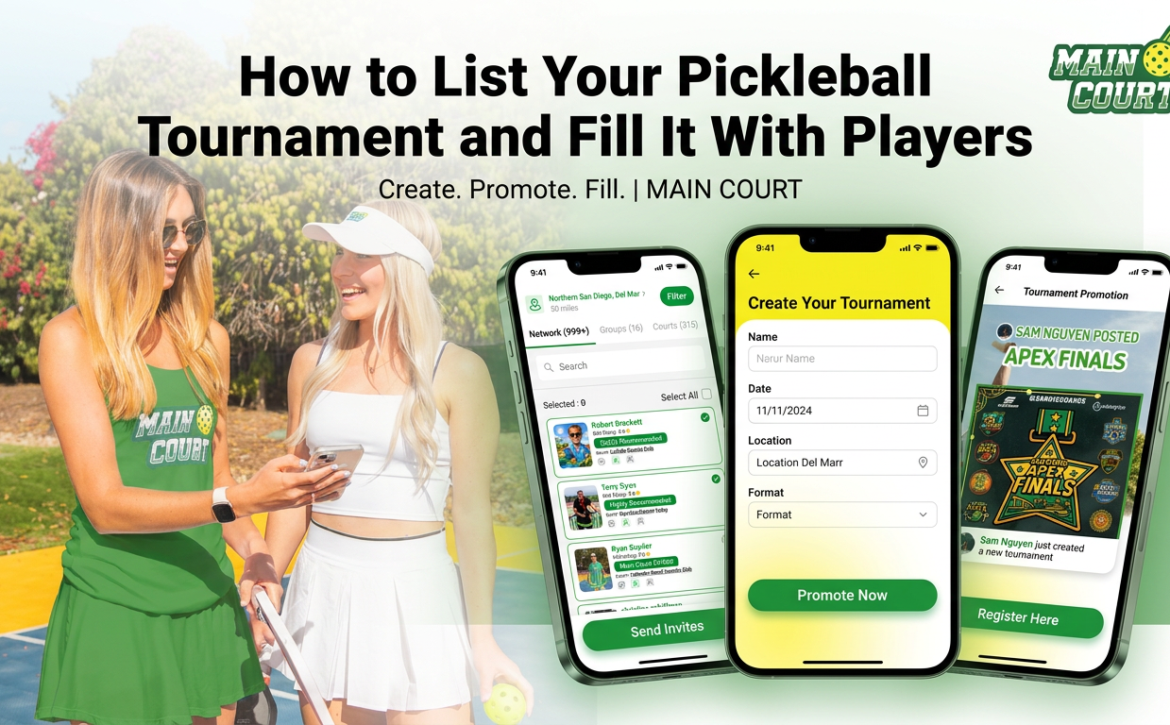
How to List Your Tournament - The Right Way
Manage all registrations, payments, and bracket details in one place
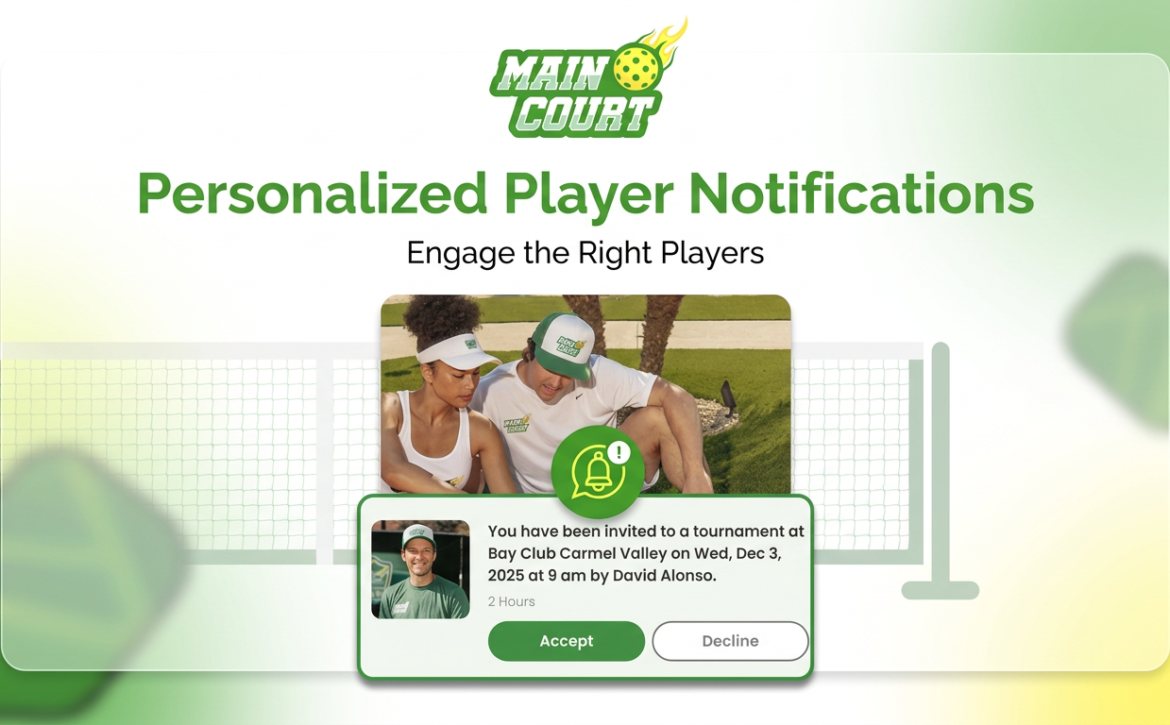
Once your event is live, players in your area searching for tournaments at your skill level get a notification. No email list required, no group chat to manage, no hope that someone forwards it to a friend. The players who see your tournament are already looking for exactly what you're offering.
Stop Promoting Tournaments the Hard Way
Tournament organizing is hard enough without promotion being the bottleneck. When you list your event on a platform built for pickleball players, you stop guessing who to reach and start filling brackets with the right players.
Maybe you just moved. Maybe you're new to the sport. Maybe your usual crew keeps flaking and you're tired of rebuilding a roster every Sunday morning. Either way, you need to find pickleball players near you, and if you're like most people, your first instinct was to join a Facebook group, type "anyone in [your city] want to play?", and wait. And wait.
Facebook Groups Were Built for Discussion. Not Discovery.
Facebook groups are forums. They are optimized for people talking to each other in a feed: sharing tips, posting memes, occasionally arguing about paddles. They are not optimized for finding a specific human within a few miles of you, who plays at your level, who is free Saturday at 9am, and who you can actually trust to show up. Nobody built them for that, and it shows every time you try to put together a game.
Yet that's how most rec players still try to find pickleball partners. Not because it works, but because nothing better existed in their head. Until they tried Main Court.
What "Finding Players" Looks Like in a Facebook Group
Here's the typical post in any "[Your City] Pickleball" Facebook group:
Posted in: San Diego Pickleball · 12,400 members
Hey everyone, just moved to North County, looking for 3.5 to 4.0 players. Free most evenings and weekends. DM me!
↳ Anna: I'm a solid 3.0, wanna come hit?
↳ Mike: Whereabouts in North County? I'm in Carlsbad
↳ Steve: I'm a 4.5 but happy to play down
↳ Kim: Are you free Saturday? My group needs a 4th
↳ Diana: What courts do you usually play at?
Seen by 847 · Useful replies: 1.
Sound familiar? You posted into a feed that shoved your request in front of thousands of people who don't match what you need, and the few who replied are strangers with no track record. That's not a community problem. That's a tool problem.
8 Ways Facebook Groups Fail You for Finding Pickleball Players
What you actually need
Facebook Groups
Main Court
Skill-level filter
✗ Everyone replies, levels guessed
✓ Main Court and DUPR skill-level filtered results
Verified rating with rating count
✗ "I'm a 4.0, trust me"
✓ Skill rating plus the number of players who rated them
Player recommendations
✗ Strangers with no signal
✓ Highly Recommended and All Star badges from past partners
Match history visible
✗ No history, no context
✓ See who they've played and how often
Distance from you
✗ City-wide feed
✓ Map and radius, sorted by distance
Availability filter
✗ DM and ask, then wait
✓ Calendar-based, by day and time
Direct match request
✗ DM chain, maybe a game
✓ One tap, request, auto-confirm
Recurring partners
✗ Hope you bump into them
✓ Save players, get notified when they post a game
💡 Tip: Most of your "find a partner" misses come from skill mismatch. Take the free pickleball skill level assessment before you start searching so your results actually fit your game.
The Geography Problem with Facebook Groups
Facebook groups are organized by city ("San Diego Pickleball," "Austin Pickleball Community"), but the courts you'd actually drive to are within 5 to 10 miles of where you live. A city-wide group dumps everyone in the same feed. You're seeing posts from people 25 miles away and completely missing the player who lives three blocks over because they posted in a different group, or didn't post at all.
Main Court is map-based. When you open the app, you see open matches and active players sorted by distance from you. No "is Encinitas too far?" math. Just who's nearby and when they're free.
The Skill Level Guessing Game
Every Facebook pickleball group has the same problem: nobody is the level they say they are. A self-described "3.5" can be anywhere from a real 2.5 to a sandbagging 4.0. You can't filter the replies, you can't verify levels before agreeing to play, and the only way to find out is to show up and discover the mismatch in person, which usually means one of you has a bad game.
Main Court uses skill ratings (with DUPR integration) plus rating counts from other players. A 4.0 with 60 ratings tells you something fundamentally different from a 4.0 with two. Set your range, and only players who actually fit show up.
The Trust Problem: You're Playing With Strangers
The deeper issue with Facebook groups isn't just skill or distance. It's that you have zero signal about the human on the other side of the message. Their level is whatever they claim. Their reliability is unknowable. The only thing you've got before driving to a court is a name and maybe a profile picture.
Main Court puts trust signals on every player profile. Their skill rating shows how many other players have rated them. Recommendations from past partners show up directly as badges: Highly Recommended, Main Court All Star. And you can see their match history before you ever send a request: who they've played, how often, how recently. Fifty matches in the last six months tells you one story. Three matches and a long gap tells you another.
You don't have to show up and hope. The information is on the screen before you commit.
How to Find Pickleball Players Near You: The Right Way
Find people you'll actually want to play with again.
It's two taps on Main Court.
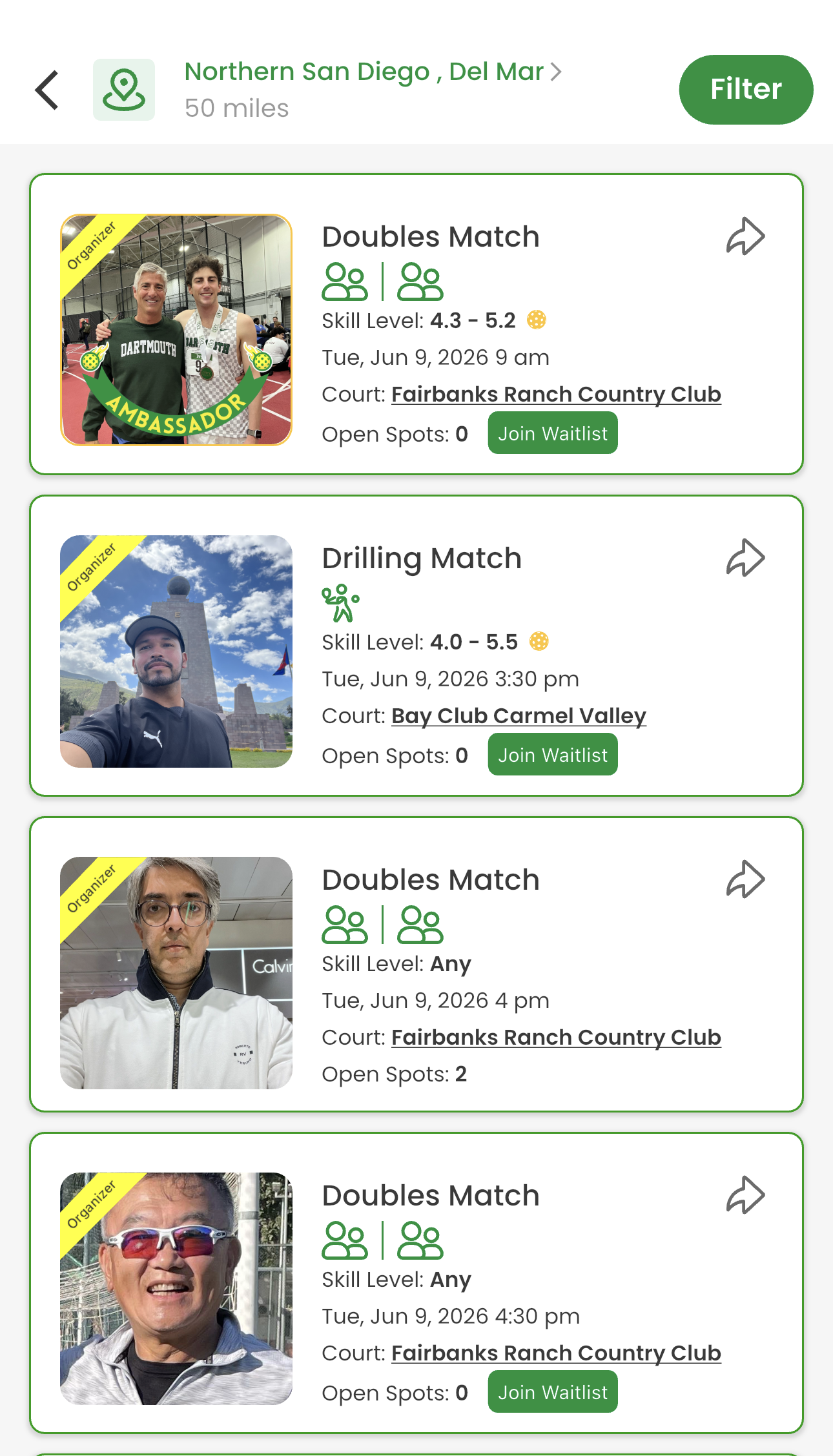
To find a game, open the app to the Open Matches feed. Set your location and radius (say, 50 miles around Del Mar), and you see every nearby match with its skill range, date, court, and open spots. Tap one that fits, request to join, and you're in. If it's full, hop on the waitlist and you get auto-promoted when someone drops.
Open Matches feed: skill range, court, date, spots left. Tap to join.
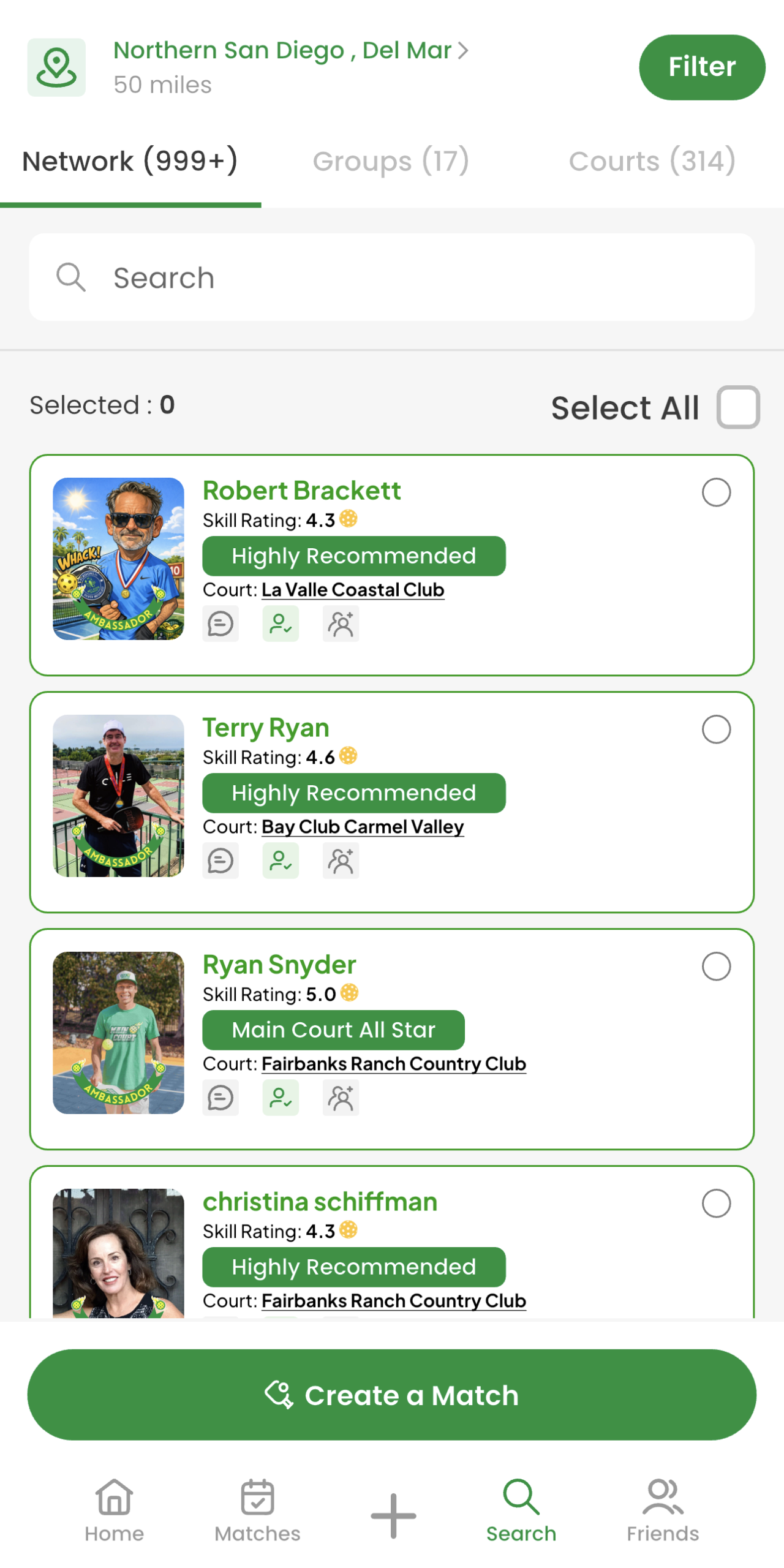
To find players, tap the Search button. You see your local network sorted by proximity, each card with their skill rating, recommendation status (Highly Recommended, Main Court All Star), and home court. Tap a player to see their full profile, recommendations, and match history before you ever send a request. Or hit Create a Match and invite the people you actually want to play with.
Search: local network with skill ratings, recommendation badges, and home courts.
That's it. No Facebook group. No DM chains. No "anyone playing Saturday?" posts shouted into the void. By the time you walk onto the court, you already know who you're playing.
Stop Looking for Pickleball Players in Facebook Groups
Find pickleball players near you, at your skill level, with the ratings and recommendations to back it up, in under a minute.
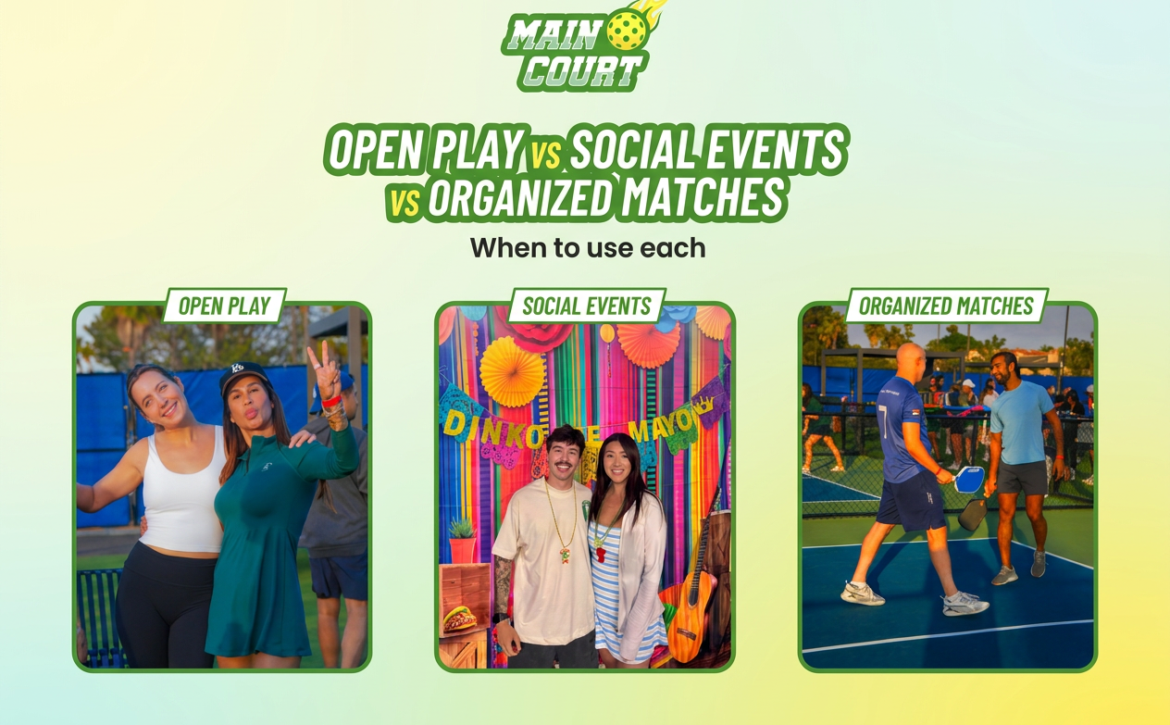
If you've been playing pickleball for more than a few months, you've probably shown up to three very different types of sessions — and walked away with three very different experiences. Open play, social events, and organized matches all go by the name "pickleball," but they serve completely different purposes. Knowing which one to join — or run — makes the difference between a great session and a wasted afternoon.
Why the Format You Choose Matters
Most players default to whatever's available — they see a court, they show up. But the format shapes everything: who you play with, whether the skill level matches, how much court time you get, and whether you leave feeling like you actually improved or just hit some balls.
The three main formats each have a job. Open play is access. Social events are connection. Organized matches are competition. When you pick the right one for what you actually want, pickleball is significantly more rewarding.
Open Play: High Access, Low Structure
Open play is the default entry point for most pickleball players. You show up to a public court or rec center, drop your paddle in a stack, and rotate in when a court opens. No reservation, no confirmed roster, no score tracking.
💡 When to use it: You're new to the sport, you want to keep moving without pressure, or you're in a new city and just need to find a court fast.
The upside is simplicity — no planning required. The downside is the skill lottery. On any given morning you might play three rallies with a beginner and then get demolished by someone who played college tennis. Neither game teaches you much.
Open play also has no continuity. You meet players, have a good game, and then never see them again because there's no mechanism to reconnect. It's a great starting point — but it has a ceiling.
Best for: Beginners, casual days, new cities, keeping active without structure.
Not ideal for: Improvement, consistent competition, building a regular crew.
Social Events: Community First, Competition Second
Social events are hosted sessions with a community focus — mixers, beginner nights, themed events, club socials. Results may or may not be tracked. The emphasis is on meeting people, not winning.
💡 When to use it: You want to expand your player network, introduce a friend to the sport, or just have fun without the pressure of competitive play.
Done well, social events are the fastest way to grow a pickleball community. Players meet people they'd never encounter at open play, make connections that turn into regular games, and leave feeling like part of something.
The key difference from open play is intentionality. A well-run social event has a host, a format (even a loose one), and a social hook beyond just hitting balls — food, music, a theme, or a charity angle. That structure is what turns a casual session into a community event.
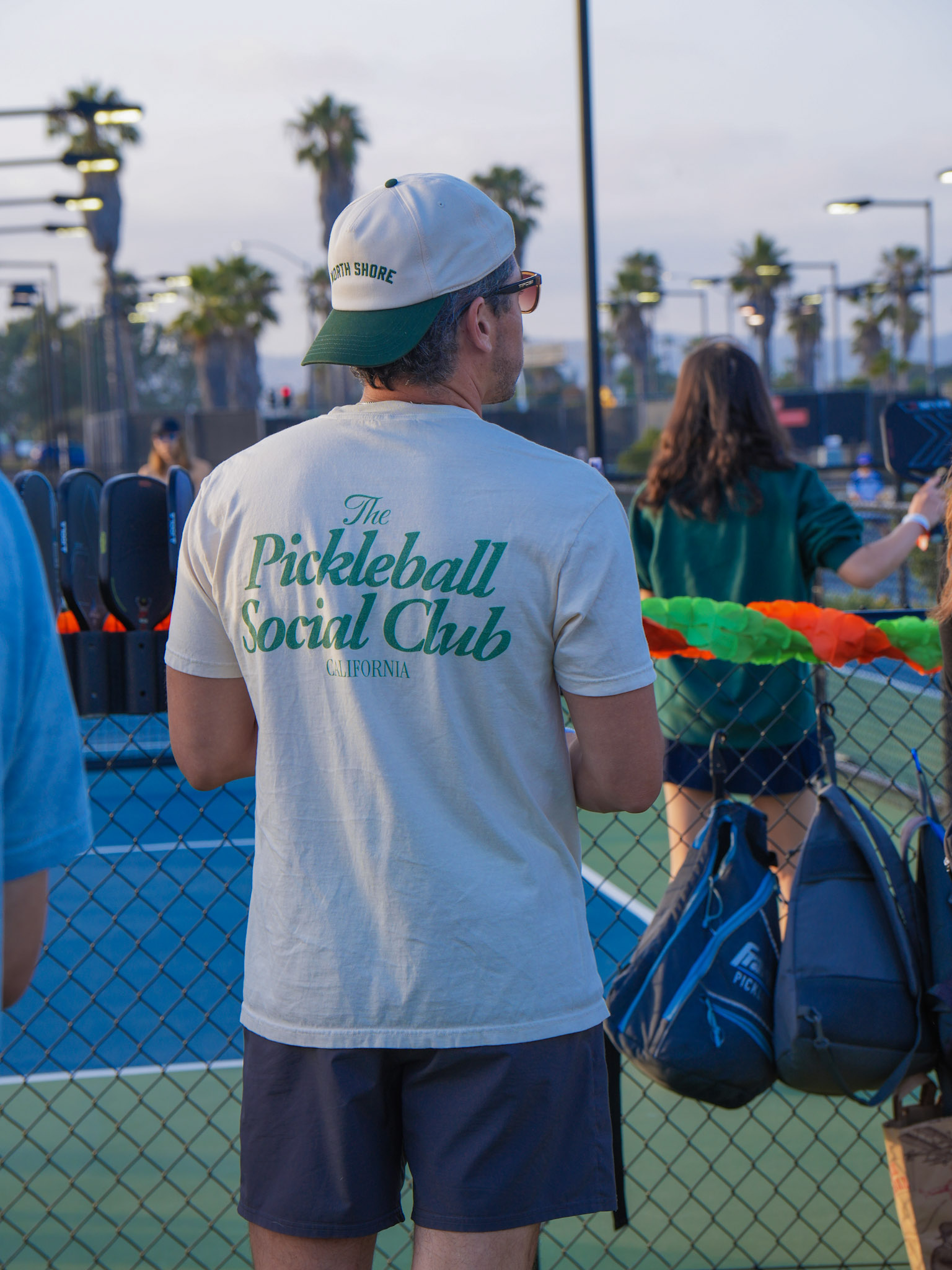
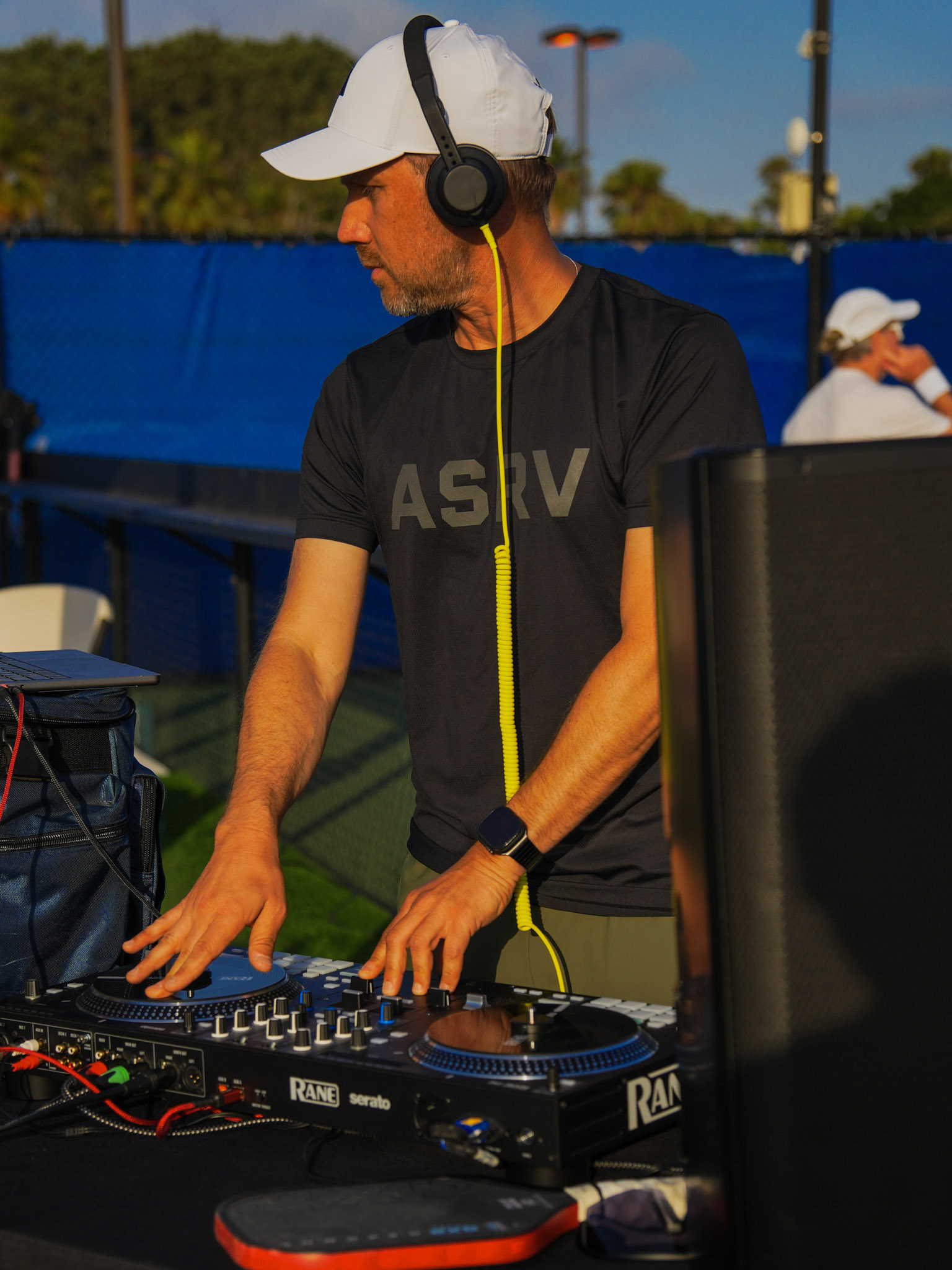
The social hook that keeps players coming back.Music, community, courts — that's a social event done right.
Best for: Meeting new players, community building, beginners, introducing friends to the sport.
Not ideal for: Competitive improvement, DUPR rating activity, skill-matched play.
An organized match is a confirmed group of players — usually 4 for doubles — playing a full scored game at a defined skill level. Everyone knows the format, everyone's playing at a similar level, and results are tracked. This is where real improvement happens.
💡 When to use it: You want to improve, play competitive games at your actual level, build a regular crew, or generate DUPR rating data. Check your skill level before filtering matches — it makes a significant difference.
Organized matches solve the two biggest problems with open play: mismatched skill levels and no continuity. Every player is confirmed before anyone shows up. Skill ranges are set in advance. And because results are tracked, you build a match history that connects you with the same players over time.
This is also the format that feeds directly into DUPR — so your regular Wednesday doubles game actually counts toward your rating, not just tournament play.
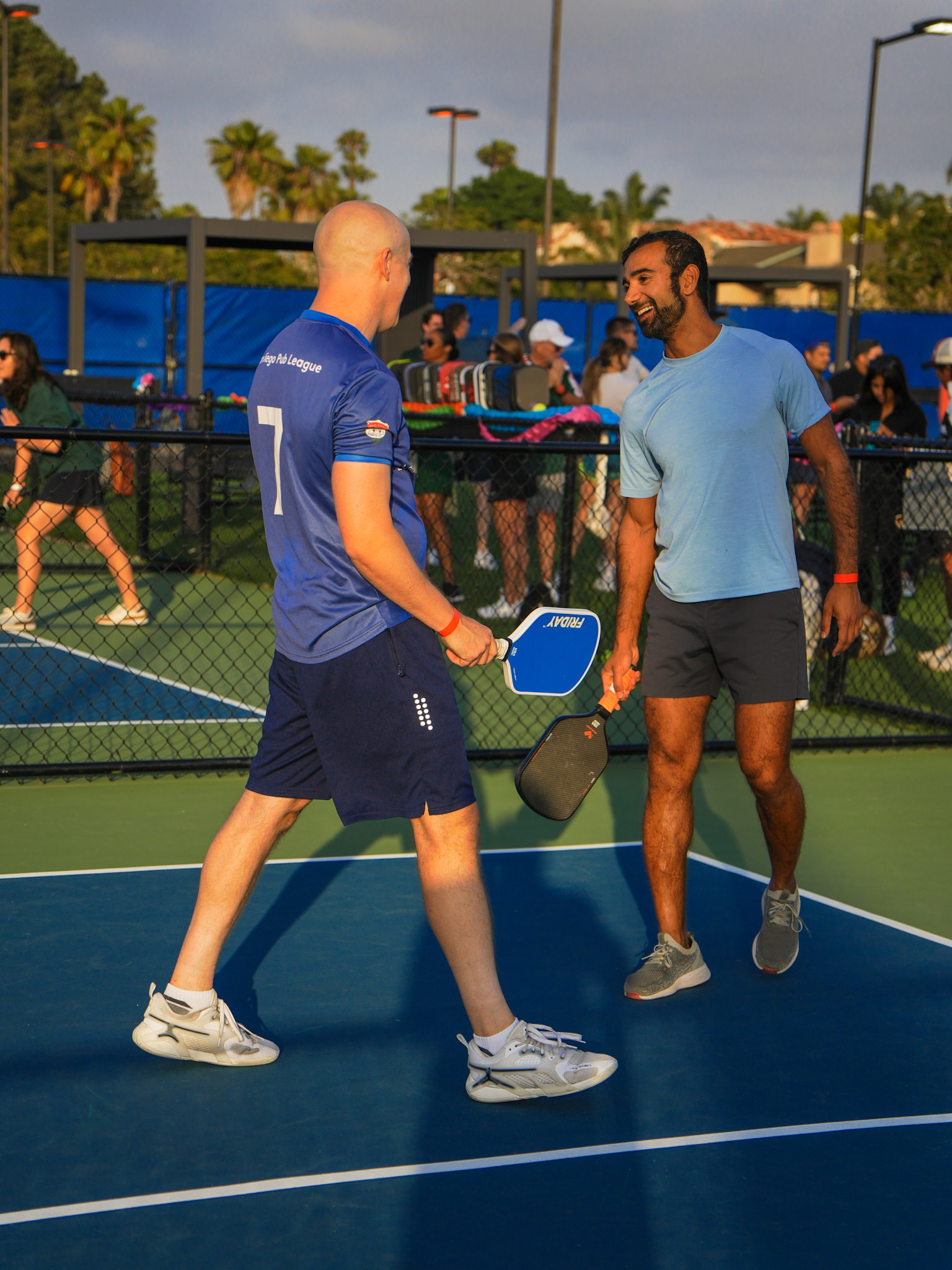
Organized matches — confirmed players, matched skill levels, real results.
Best for: Competitive improvement, DUPR activity, building a regular crew, tournament prep.
Not ideal for: Drop-in play, mixed skill levels, casual socializing without structure.
How to Choose the Right Format
Most active pickleball players benefit from all three formats at different points. Open play keeps you moving. Social events expand your network. Organized matches make you better. The mistake is using only one when you actually need something else.
How Main Court Supports All Three
Main Court is built around all three formats — not just one. You can browse and join open play sessions, RSVP to social events, or find and create organized matches filtered by skill level, all in the same app.
For organizers, each format has its own setup flow. Create an open play session and let anyone join. Set up a social event with RSVP management and a capacity limit. Or post a skill-filtered organized match with automatic confirmation, reminders, and waitlist management.
If you're tired of the group chat chaos that comes with trying to organize any of these formats manually, our post on why your pickleball group chat is killing your game breaks down exactly why a dedicated platform changes everything.
The right format for the right moment — and all of them in one place.
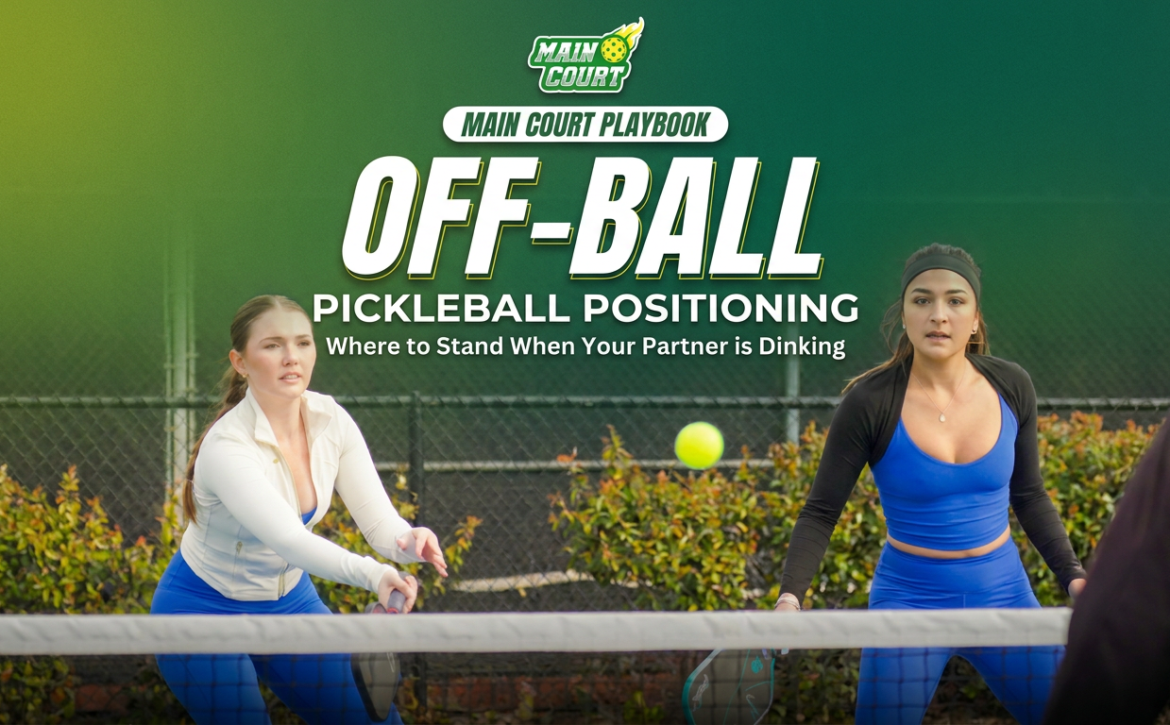
When your partner is dinking at the kitchen line, what are you doing? Most recreational players either crowd their partner, drift too wide, or just watch the rally hoping nothing comes their way. That's leaving points on the table. The off-ball player has a specific job — and once you understand it, your team's court coverage goes from reactive to coordinated.
The two roles of the off-ball player
Your off-ball pickleball positioning switches between two modes depending on where your partner is on the court. When your partner is dinking wide crosscourt, you become the pressure player — positioned about one step from the middle, covering the seam and ready to attack. When your partner moves to the middle, you shift into a defensive wall — slightly back, focused on reach and countering anything redirected your way. The mistake most players make is staying in one fixed position regardless of where their partner moves. Your positioning must be dynamic, not static.
Never crowd your partner
This is the most common off-ball positioning mistake we see across all skill levels in our community. When you drift too close to your partner, you double-cover one side of the court and leave a massive gap on the other. Your partner doesn't need help covering their zone — they need you covering yours.
💡 Quick rule: If you could reach out and touch your partner, you're too close.
Maintain enough separation that you can each cover your side independently while together closing the middle seam. Adjust your position dynamically based on where your partner is at all times.
Full tracking vs half tracking: how to watch the ball
As the off-ball player, how much you turn your head to follow the ball matters more than most players realize. There are two approaches and each has a tradeoff.
Full tracking means turning your head completely to follow the ball. You get the best read on trajectory and direction — especially important when your partner is moving unpredictably or playing off the kitchen line. The downside is it can be slightly slower in fast exchanges.
Half tracking means keeping your head more forward and using peripheral vision to monitor your partner's paddle while watching the ball at the edges of your vision. Faster reaction time but riskier if the opponent changes direction abruptly.
For most players at the 3.0–4.0 level, default to full tracking until your court awareness and pattern recognition improve naturally.
When you're the pressure player
When your partner is dinking wide crosscourt, your job is to apply pressure from the middle. Position yourself about one step from the center line — close enough to close the middle seam quickly, far enough to cover the line if needed. You're not just waiting. You're threatening. Your presence in the middle forces the opponent to think twice about attacking through the seam, which opens up better opportunities for your partner's dinking angle. Stay light on your feet and be ready to intercept anything that comes through the middle.
When you're the defensive wall
When your partner moves into the middle to apply pressure, your role shifts to defense. Step back slightly, widen your base, and focus on reach. You're the backstop — your job is to handle anything that gets redirected your way, whether it's a flick down the line or a reset dink. Stay neutral, watch the opponent's paddle face, and react. Your backhand is usually your primary weapon in this position since most attacks from the middle come cross-body.
Off-ball positioning and your skill level
Off-ball awareness is one of the clearest markers of a player moving from 3.5 toward 4.0 and beyond. Players who understand off-ball pickleball positioning feel like they always know what's coming — because they've trained their reads. If you're not sure where you sit on the skill scale, take the free 3-minute skill assessment and use it as a baseline. Focus on the off-ball habits in this post and reassess in a month. The improvement will be measurable.
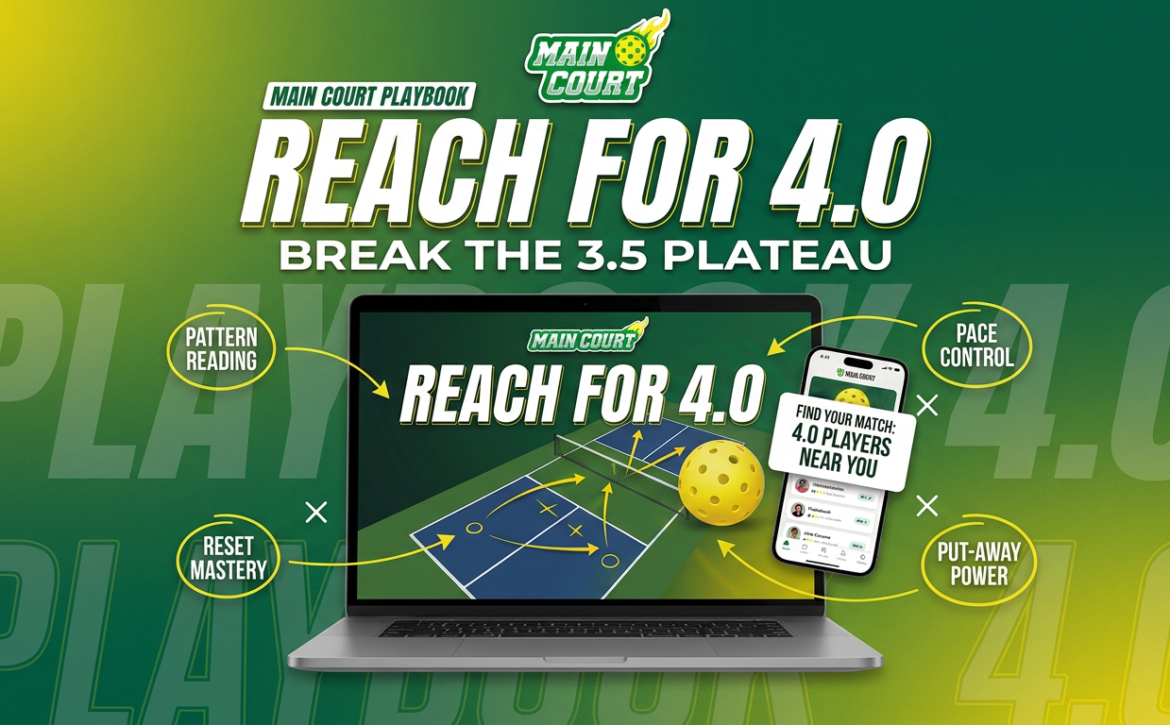
Pickleball 3.5 to 4.0: 8 Skills That Bridge the Gap
If your pickleball 3.5 to 4.0 jump feels stuck, you are not alone. Your shots are clean, your technique is solid, but the breakthrough has not clicked.
The gap is real. But it is a step ladder, not a chasm. Below are eight skills that bridge it: five strategic, three technical.
4.0 by the numbers
6+
consistent dinks per rally
80%+
of third shots are drops
100%
put-away on shoulder-high balls
What you'll learn
1. Efficient hands beat fast hands2. Watch patterns, ignore highlights3. Pace control: absorb, don't push4. Reset before you lose the point5. Transition forward off the third6. Dink consistently, not aggressively7. Default to the drop on thirds8. Crush every shoulder-high ball
Part One · 5 Strategic Skills
1
The shortcut to fast hands isn't speed
Watch a 4.5 player at the net and it looks like pure reaction speed, but there is a step before speed that almost nobody talks about: efficiency. Most intermediate players lose hands battles because their paddle takes the long way to the ball. Big windups, side-to-side swings, paddle drifting out of the frame.
The shortest distance between two points is a straight line. Get your paddle in the path of the ball as quickly as possible, and that is it. Don't think fast, think efficient. The speed comes later, layered on top of efficiency. Try to skip this step and your reactions will just spray balls everywhere.
Drill it
Keep the paddle out in front, in your peripheral vision, at all times. Point A to point B. No detours.
2
Watch the patterns, ignore the highlights
Predicting your opponent is one of the most satisfying parts of advanced play, but the trap is trying to read everything they do. You don't need to. You just need to ignore one-offs and notice patterns.
If your opponent rips a wild two-handed backhand passing shot once, let it go. Twice, file it. The third time, you have a pattern, and now you can sit on it. Counter once, and you have done more than win the point. You have told them, "I am watching." That mental pressure is half of what separates 3.5 from 4.0.
3
When pace comes in, pace comes out
Most intermediate players try to do too much with the ball. Here is the rule: pace control is about your opponent, not you. When pace comes in, pace comes out. That is just physics. Push the paddle forward on a hard shot and you will send it past the kitchen every time.
The fix is mechanical. Instead of pushing the paddle forward, learn to bring it slightly in toward your body to absorb the pace. Stand in the transition zone, have a partner at the kitchen rip hard shots at you, and practice dropping them dead in the kitchen. Repeat until trusting the incoming pace feels normal.
4
Reset the point before you lose it
Resetting is the moment in a point when you realize, "We are about to lose this. I need to slow it down." It is pure self-awareness, and it is the single most underrated skill in pickleball.
Picture this: you and your partner are on the baseline, your opponents are at the net, and they just slammed your third back at your feet. They have the advantage. Your job now is not to hit a winner. It is to neutralize. Put the ball below the net somewhere in their kitchen. Below the net forces them to hit up. Up means soft. Soft buys you time to get forward.
"
Intermediate players let chaos win the point. Advanced players reject the chaos and reorganize.
5
Pickleball 3.5 to 4.0: the transition is everything
The transition, meaning moving from the baseline to the net after your third shot, is what defines higher-level play. Pickleball points are won at the net. Period. Most 3.5 players know this and still don't move forward, because it feels scary. That is the pressure paradox.
If your third shot is decent (low, with topspin, making your opponents move) and you don't follow it forward, you have wasted it. They can hit anything they want because you are nowhere near the net to take it out of the air. The quality of your third only matters if you back it up with your feet.
Flip it: when you move forward, your opponent's brain shifts. Suddenly they have to think about shot selection, not offense. They can't lazily lob or attack low. They have to play defense. Moving forward feels riskier, but it is what puts the pressure on them.
If your third pops up, hold the transition zone and reset (skill 4). If it is low or moving them, book it. Not sure where you actually sit between 3.5 and 4.0? Our pickleball skill level assessment is a quick gut-check before you start drilling these.
"
The more you move forward physically, the more you move forward developmentally.
Part Two · 3 Technical Fundamentals
6
Dink consistently, not aggressively
At 3.5, dink rallies are short. Two or three exchanges and someone pops one up or pushes one out. At 4.0, you have to hit four, five, six, sometimes eight or more consistent dinks in a row before anyone breaks. The dinks do not need to be offensive. They need to land in the kitchen, every time.
The mechanics are simple, and that is the point. Low knee bend, paddle out in front, minimal backswing, minimal follow-through. Most 3.5 players lose dink rallies because they try to do too much: bigger backswings, swinging finishes, paddle behind the body. Every extra motion is a new way to miss. Keep it tight.
Drill it
Forehand, backhand, cross-court, line, it does not matter. Paddle in front, minimal swing, ball in the kitchen.
7
Default to the drop, drive only on high returns
Skill 5 said get to the kitchen. This is how. Most coaches will tell you to hit drops on 60 to 70 percent of your third shots. At the 4.0 level, that number should be higher. Plenty of advanced players hit drops on 90 percent of their thirds, because their first job is getting to the kitchen line, not winning the point from the baseline.
Drives are for one situation only: when the return floats up high enough that you can step in, contact it above your knees, and drive it down into your opponents' feet. Anything lower than that becomes a drop. Try to drive a low return and you are either dumping it in the net or getting stuck back in no man's land for three more shots.
The pattern is: drop the third, move up to the transition zone, stop when your opponent contacts the ball, then close to the kitchen line on the next shot. Now you are even, and the dink battle begins.
8
Crush every shoulder-height ball
This is the skill that flips dink rallies into point wins. At 3.5, players see a high ball and tap it back firmly. At 4.0, anything at shoulder height or above gets crushed, every single time. Soft returns of high balls are how 3.5 players give back the point they just earned.
The technique matters. Paddle on top of the ball, contact point about six inches in front of your body, swing straight through with intent. Not a huge backswing, just enough room behind you to generate paddle speed. Aim down at your opponent's feet, not flat across the court.
If you let the ball get next to you or behind you, all you can do is flick at it. No paddle speed, no put-away. Step into it, contact it out front, and finish.
Drill it
Shoulder height or above? Hit it down. Every time. No exceptions.
The catch
You can't drill these skills alone
Every skill on this list needs reps against players who'll actually challenge you. Six-dink rallies, transition pressure, put-away setups. None of it happens with the same open-play crowd that lets you coast.
Most 3.5 players stay stuck not because they can't learn the skills, but because they can't find pickleball players near them at the right level. Facebook groups and group chats are the worst possible matchmaking layer. That is the real bottleneck between 3.5 and 4.0, and it is exactly what Main Court fixes.
Drill against opponents who'll actually push you
None of these skills develop in a vacuum. Find a regular hitting partner a level above you, drill the absorb-and-reset pattern, push every third as a drop, and finish every shoulder-height ball. Six weeks in, you'll feel the rung shift.