Pickleball 3.5 to 4.0: 8 Skills That Bridge the Gap

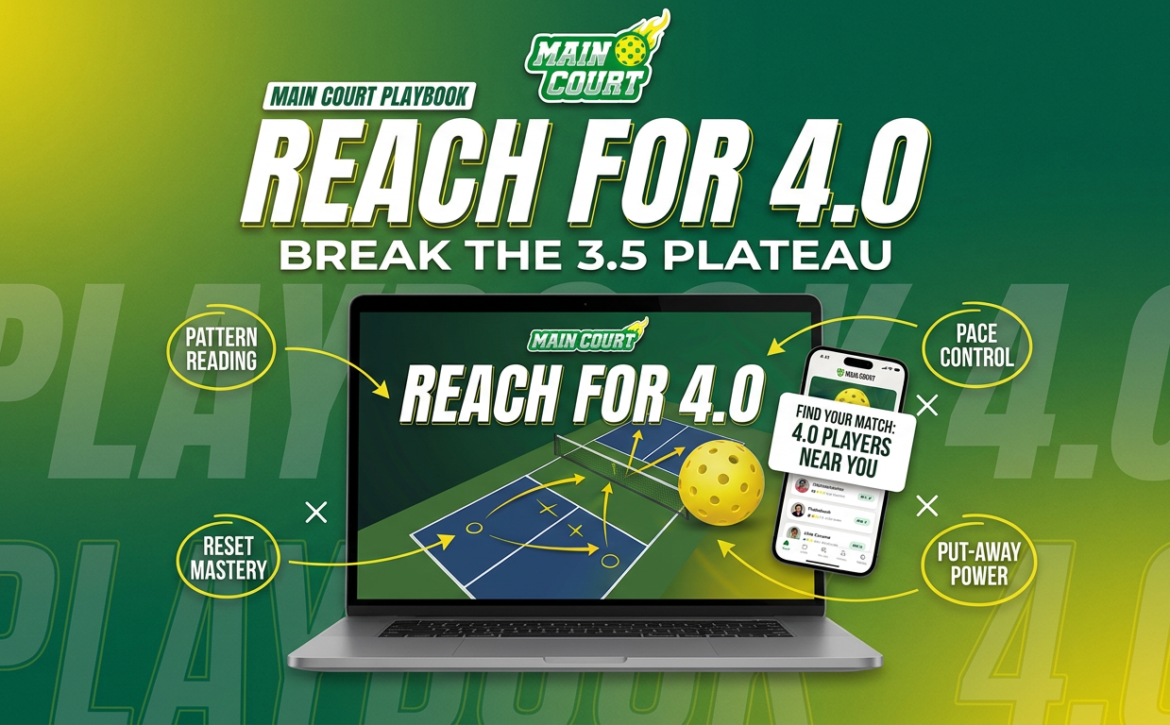
Main Court Main Court Playbook

Pickleball 3.5 to 4.0: 8 Skills That Bridge the Gap

If your pickleball 3.5 to 4.0 jump feels stuck, you are not alone. Your shots are clean, your technique is solid, but the breakthrough has not clicked.

The gap is real. But it is a step ladder, not a chasm. Below are eight skills that bridge it: five strategic, three technical.

4.0 by the numbers

6+

consistent dinks per rally

80%+

of third shots are drops

100%

put-away on shoulder-high balls

What you'll learn

1. Efficient hands beat fast hands 2. Watch patterns, ignore highlights 3. Pace control: absorb, don't push 4. Reset before you lose the point 5. Transition forward off the third 6. Dink consistently, not aggressively 7. Default to the drop on thirds 8. Crush every shoulder-high ball
Part One · 5 Strategic Skills
1

The shortcut to fast hands isn't speed

Watch a 4.5 player at the net and it looks like pure reaction speed, but there is a step before speed that almost nobody talks about: efficiency. Most intermediate players lose hands battles because their paddle takes the long way to the ball. Big windups, side-to-side swings, paddle drifting out of the frame.

The shortest distance between two points is a straight line. Get your paddle in the path of the ball as quickly as possible, and that is it. Don't think fast, think efficient. The speed comes later, layered on top of efficiency. Try to skip this step and your reactions will just spray balls everywhere.

Drill it Keep the paddle out in front, in your peripheral vision, at all times. Point A to point B. No detours.
2

Watch the patterns, ignore the highlights

Predicting your opponent is one of the most satisfying parts of advanced play, but the trap is trying to read everything they do. You don't need to. You just need to ignore one-offs and notice patterns.

If your opponent rips a wild two-handed backhand passing shot once, let it go. Twice, file it. The third time, you have a pattern, and now you can sit on it. Counter once, and you have done more than win the point. You have told them, "I am watching." That mental pressure is half of what separates 3.5 from 4.0.

3

When pace comes in, pace comes out

Most intermediate players try to do too much with the ball. Here is the rule: pace control is about your opponent, not you. When pace comes in, pace comes out. That is just physics. Push the paddle forward on a hard shot and you will send it past the kitchen every time.

The fix is mechanical. Instead of pushing the paddle forward, learn to bring it slightly in toward your body to absorb the pace. Stand in the transition zone, have a partner at the kitchen rip hard shots at you, and practice dropping them dead in the kitchen. Repeat until trusting the incoming pace feels normal.

4

Reset the point before you lose it

Resetting is the moment in a point when you realize, "We are about to lose this. I need to slow it down." It is pure self-awareness, and it is the single most underrated skill in pickleball.

Picture this: you and your partner are on the baseline, your opponents are at the net, and they just slammed your third back at your feet. They have the advantage. Your job now is not to hit a winner. It is to neutralize. Put the ball below the net somewhere in their kitchen. Below the net forces them to hit up. Up means soft. Soft buys you time to get forward.

" Intermediate players let chaos win the point. Advanced players reject the chaos and reorganize.
5

Pickleball 3.5 to 4.0: the transition is everything

The transition, meaning moving from the baseline to the net after your third shot, is what defines higher-level play. Pickleball points are won at the net. Period. Most 3.5 players know this and still don't move forward, because it feels scary. That is the pressure paradox.

If your third shot is decent (low, with topspin, making your opponents move) and you don't follow it forward, you have wasted it. They can hit anything they want because you are nowhere near the net to take it out of the air. The quality of your third only matters if you back it up with your feet.

Flip it: when you move forward, your opponent's brain shifts. Suddenly they have to think about shot selection, not offense. They can't lazily lob or attack low. They have to play defense. Moving forward feels riskier, but it is what puts the pressure on them.

If your third pops up, hold the transition zone and reset (skill 4). If it is low or moving them, book it. Not sure where you actually sit between 3.5 and 4.0? Our pickleball skill level assessment is a quick gut-check before you start drilling these.

" The more you move forward physically, the more you move forward developmentally.
Part Two · 3 Technical Fundamentals
6

Dink consistently, not aggressively

At 3.5, dink rallies are short. Two or three exchanges and someone pops one up or pushes one out. At 4.0, you have to hit four, five, six, sometimes eight or more consistent dinks in a row before anyone breaks. The dinks do not need to be offensive. They need to land in the kitchen, every time.

The mechanics are simple, and that is the point. Low knee bend, paddle out in front, minimal backswing, minimal follow-through. Most 3.5 players lose dink rallies because they try to do too much: bigger backswings, swinging finishes, paddle behind the body. Every extra motion is a new way to miss. Keep it tight.

Drill it Forehand, backhand, cross-court, line, it does not matter. Paddle in front, minimal swing, ball in the kitchen.
7

Default to the drop, drive only on high returns

Skill 5 said get to the kitchen. This is how. Most coaches will tell you to hit drops on 60 to 70 percent of your third shots. At the 4.0 level, that number should be higher. Plenty of advanced players hit drops on 90 percent of their thirds, because their first job is getting to the kitchen line, not winning the point from the baseline.

Drives are for one situation only: when the return floats up high enough that you can step in, contact it above your knees, and drive it down into your opponents' feet. Anything lower than that becomes a drop. Try to drive a low return and you are either dumping it in the net or getting stuck back in no man's land for three more shots.

The pattern is: drop the third, move up to the transition zone, stop when your opponent contacts the ball, then close to the kitchen line on the next shot. Now you are even, and the dink battle begins.

8

Crush every shoulder-height ball

This is the skill that flips dink rallies into point wins. At 3.5, players see a high ball and tap it back firmly. At 4.0, anything at shoulder height or above gets crushed, every single time. Soft returns of high balls are how 3.5 players give back the point they just earned.

The technique matters. Paddle on top of the ball, contact point about six inches in front of your body, swing straight through with intent. Not a huge backswing, just enough room behind you to generate paddle speed. Aim down at your opponent's feet, not flat across the court.

If you let the ball get next to you or behind you, all you can do is flick at it. No paddle speed, no put-away. Step into it, contact it out front, and finish.

Drill it Shoulder height or above? Hit it down. Every time. No exceptions.

The catch

You can't drill these skills alone

Every skill on this list needs reps against players who'll actually challenge you. Six-dink rallies, transition pressure, put-away setups. None of it happens with the same open-play crowd that lets you coast.

Most 3.5 players stay stuck not because they can't learn the skills, but because they can't find pickleball players near them at the right level. Facebook groups and group chats are the worst possible matchmaking layer. That is the real bottleneck between 3.5 and 4.0, and it is exactly what Main Court fixes.

Drill against opponents who'll actually push you

None of these skills develop in a vacuum. Find a regular hitting partner a level above you, drill the absorb-and-reset pattern, push every third as a drop, and finish every shoulder-height ball. Six weeks in, you'll feel the rung shift.
Main Court

Find players who'll push you to 4.0

Main Court matches you with players at your level, and one level above. Drill resets, transitions, and pace control against the right opponents, not the same open-play loop.

Learn More

Ditch the Pickleball Group Chat | Main Court

Main Court

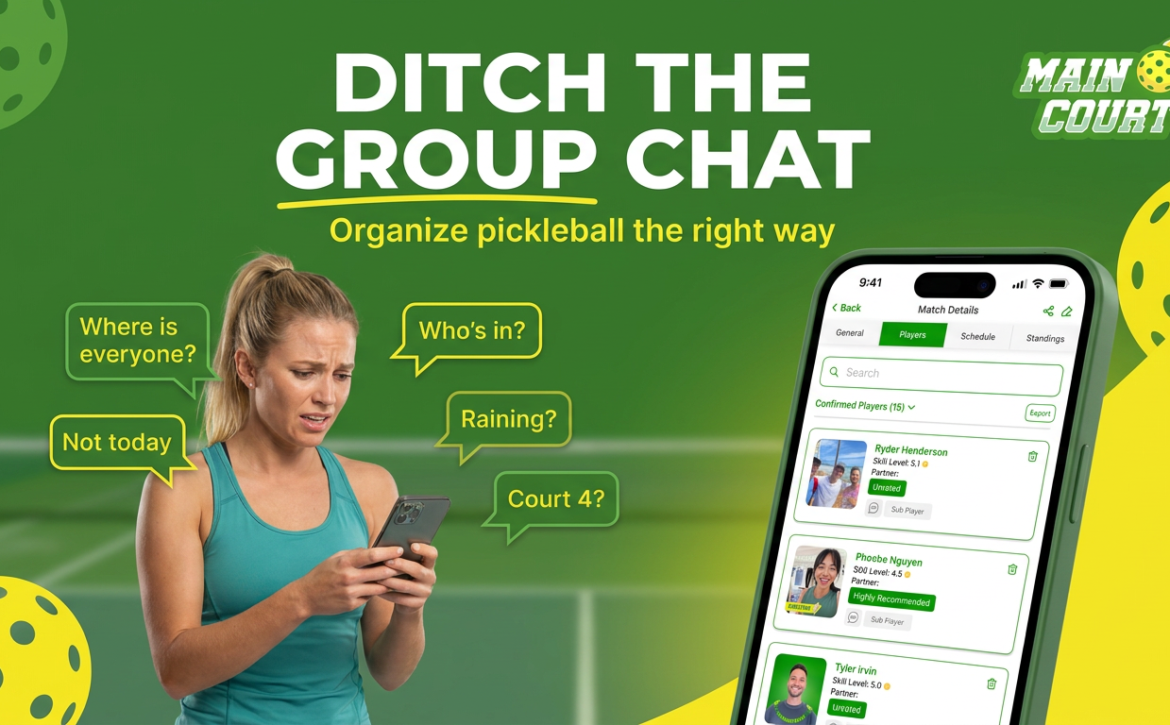
If you organize pickleball through a group chat — Facebook, WhatsApp, or SMS — you already know the drill. You post, you wait, you chase replies, you manage a cancellation at 7am, and by the time you've sorted it all out you've spent more energy on logistics than on actually playing. Your pickleball group chat was never built for this.

The Group Chat Was Built for Talking. Not Organizing.

Facebook groups, WhatsApp threads, and SMS chains are communication tools. They're good at sending messages. They are not good at managing RSVPs, tracking who's confirmed, filtering by skill level, handling waitlists, or sending reminders. Nobody built them for that — and it shows every time you try to pull a game together.

Yet this is how most recreational pickleball gets organized. Not because it works, but because nothing better existed. Until now.

What Actually Happens in a Pickleball Group Chat

Here's how a typical Wednesday game comes together in a WhatsApp or Facebook group:

🎾 Pickleball Wednesday Crew 47 members Dave Anyone free Wed 6pm? Need 3 more 🏓 Sarah I'm in! What level? 3.5-4.0 ideally, courts at Balboa Mike Can I bring my cousin? He's a 2.5 Tom Maybe, depends on work 🤷 Sarah Actually I forgot I have dinner, sorry! So who's actually confirmed?? 😩 Tom 👀 [seen by 31 members, no reply]

Sound familiar? That's not a communication problem — it's a tool problem. You're using a chat app to do the job of a sports organizer platform.

8 Ways a Pickleball Group Chat Fails You

Feature FB / WhatsApp / SMS Main Court Skill level filtering ✗ Anyone replies ✓ DUPR-filtered Confirmed player list ✗ Buried in 40 messages ✓ Live dashboard Last-minute cancellations ✗ Manual scramble ✓ Auto waitlist fills the spot Reminders sent automatically ✗ You do it manually ✓ 48hr + day-of Player reliability history ✗ No record, learn the hard way ✓ Full match history per player Built-in player network ✗ Contacts only, no discovery ✓ Grow your pickleball friends Payments & refunds ✗ Venmo chaos, manual refunds ✓ Managed in-app, refunds included Round robins ✗ Spreadsheets & whiteboards ✓ Auto-scheduled, live standings
💡 Tip: Before your next game, check your actual pickleball skill level — it's the single biggest factor in whether a match is worth showing up for.

Facebook Groups Have a Skill Level Problem

Facebook groups have one specific failure that makes player matching nearly impossible: there's no skill filter. You post "looking for 4.0 players Saturday morning" and you get replies from everyone — 2.5s who think they're 4.0s, 5.0s who are bored, and people asking what court it's on.

The result is either an awkward conversation about turning people away, or you accept everyone and end up with a match that's a mess for half the players. Neither outcome builds the community you're trying to create.

Main Court lets you set a skill range when you create a match. Only players who qualify can see and request to join. No awkward conversations, no mismatched games.

WhatsApp and SMS Don't Scale Past 8 Players

WhatsApp and SMS threads work fine for a tight group of 6 friends who've played together for years. The moment you try to grow — add new players, manage a rotating roster, run a recurring game — it breaks down fast.

Messages stack up. Context gets lost. New players don't have the history. And every week you're starting from scratch, re-explaining logistics that should be automatic.

Organizers running games on Main Court report spending a fraction of the time on logistics compared to group chats — because the platform handles the repetitive parts: invites, confirmations, reminders, waitlists, and cancellation fills. The organizer shows up and plays.

What Organizing Pickleball Should Actually Look Like

Create a match in under 3 minutes. Set your skill range. Post it to your network or open it to the Main Court community. Players request to join, you approve. Reminders go out automatically. If someone cancels, the next person on the waitlist gets notified instantly.

You walk onto the court knowing exactly who's showing up, what level they play, and that they've been reminded twice. No chasing, no "who's still in?", no last-minute panic.

That's what organizing pickleball looks like when you're using the right tool for the job.

Learn More

How to Break the 4.0 Pickleball Plateau

Main Court

Main Court Playbook · Reach for 4.5+

How to Break the 4.0 Pickleball Plateau

Almost every regular pickleball player hits the 4.0 pickleball plateau. From what we see across the Main Court community, the wall is rarely about technique — paddle skill at 4.0 looks broadly similar to paddle skill at 4.5. What changes is everything that happens between the shots: positioning instincts, shot selection, recovery habits, how you weight the next moment. Below are five recurring habit shifts we see in players who eventually break through, plus the part nobody talks about enough — how finding pickleball matches at your correct skill level is the single biggest accelerant for any of it.

1. Treat dinks like geometry, not artistry

At 4.0 most players’ dinks aren’t sloppy — they’re beautifully struck and landing in useless spots. Cross-court, only two zones genuinely pressure the other side: the wide back corner of their kitchen, and the back of their kitchen toward the centerline (right at their inside foot when they’re set). Everything in between is a soft pitch onto their forehand. Cycle between those two zones, accept that some attempts sail long, and stop feeding the backhand flick you’re about to get burned on.

NET KITCHEN (NVZ) CORNER (outside) MIDDLE (inside foot) YOU

2. Pattern recognition beats prediction every time

Watch a 4.5 rally and the players look like they’re reading minds. They aren’t. They’re running a mental lookup table of patterns they’ve seen hundreds of times and reacting fractionally faster than everyone else. Here’s one pattern you can bank tomorrow: a low flick aimed across an opponent’s body comes back to your same side roughly 90% of the time. So the higher-level player doesn’t guess — they pre-load. Weight shifts before the ball clears the net, paddle is already in the lane, the counter arrives exactly where they expected it to. The skill isn’t prediction. It’s a library, and the library only grows when you play opponents who haven’t already shown you their cards.

NET KITCHEN (NVZ) YOU OPP 1. flick 2. ~90% same side

3. Floated a dink? Your next priority is positioning, not paddle

Every advanced player puts a dink in the air occasionally. The plateau habit is to brace stiff and prepare for “anything” coming back. Problem: anything isn’t equally likely. Against a right-handed opponent, the speedup through the middle seam is the highest-probability attack from a dead dink — by a margin that isn’t close. So default your paddle and your body into the middle. Cover the angle as the secondary read. Most stuck players obsess over reset technique and almost never train where they should be standing after a bad reset. Flip the ratio.

NET KITCHEN (NVZ) center COVER MIDDLE popped dink speedup

4. Pace at contact is doing all the work — not paddle face

This is the diagnosis plateaued players resist longest. They’ll tinker with grip, contact spot, paddle face angle, anything except the actual culprit — how fast the paddle is moving when it meets the ball. A dink only fails when it travels too far past the line, and that distance is governed by one variable: pace at contact. So when you’re stretched or scrambling, the right move is counterintuitive: swing slower, not harder. Decelerating reclaims depth, restores balance, and keeps you alive in the point instead of handing it over to a put-away.

aim here SLOW depth control FAST attackable pop SWING SPEED

5. Wide base for range, soft hands when the ball dips at your feet

Two habits combine here and you need both. First: a narrow stance is a hard cap on lateral range. You physically cannot shuffle wide from a stance that hasn’t pre-loaded the push, so reset into a wide athletic base between every point. Second: when the rally pulls you wide and a kicking ball is dipping at your shoelaces, do not hit topspin. The contact point is below kitchen-line height, topspin sends it long, and the other team rolls it back at your feet. A slice, cup dink, or soft block keeps you in the rally. Topspin into a low wide ball is how someone else’s highlight reel ends up with you in the background.

NARROW = STUCK WIDE = RANGE

The part nobody talks about: finding pickleball matches at your correct skill level

Every plateau breakthrough we see follows the same shape. The player stops grinding mixed-level open plays and starts finding pickleball matches at their correct skill level. Here’s why that matters more than another paddle change or YouTube binge: playing exclusively against stronger opponents means you never close out points or test your reset under real pressure. Playing exclusively against weaker opponents means none of the five habits above ever get challenged. The sweet spot is consistent, level-matched competition — opponents half a step ahead or behind you, who force the decisions and reward the right ones. Playing at your correct skill level isn’t a small input. In our experience running the platform, it’s the single biggest factor separating pickleball players who climb from players who plateau — far outweighing technique tweaks, gear changes, or hours logged. If you don’t know where you actually sit on the 1.0–5.0 scale, take the free 3-minute skill assessment and then play the people the system surfaces. The compounding starts immediately.

Find pickleball matches at your level.

Main Court matches you with pickleball players in your skill band, near you — so bad reps get punished, good ones compound, and the habits in this post actually stick. Free to join.

Learn More

Pickleball Skill Levels: Find Yours Free in 3 Min

Every pickleball player goes through the same journey — from first rallies to wanting competitive matches. Knowing your skill level is the key to better games, faster improvement, and finding the right players to compete with.

Learn More

Digital vs IRL Pickleball Community & How Main Court Bridges the Gap

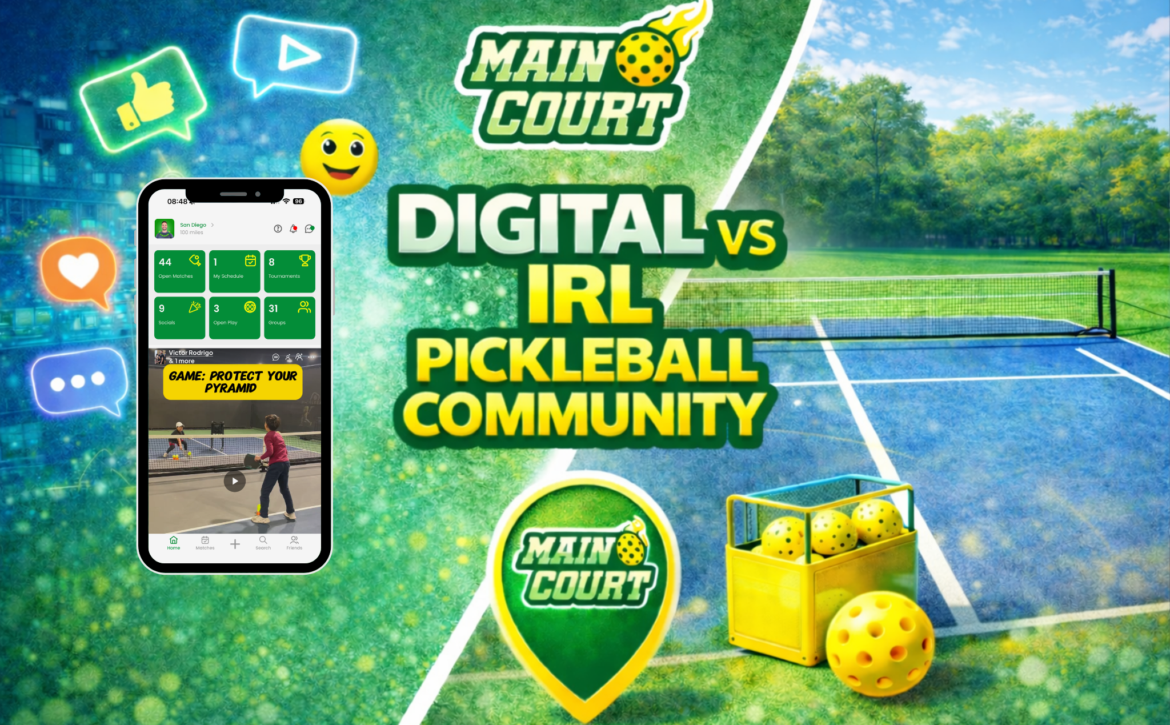
Pickleball thrives both online and on the court. From digital communities to real-life play, here’s how players can use Main Court to get the best of both worlds and build stronger connections through the game.

Learn More

Tournament Marketing Made Easy: How Main Court Helps You Fill Brackets Fast

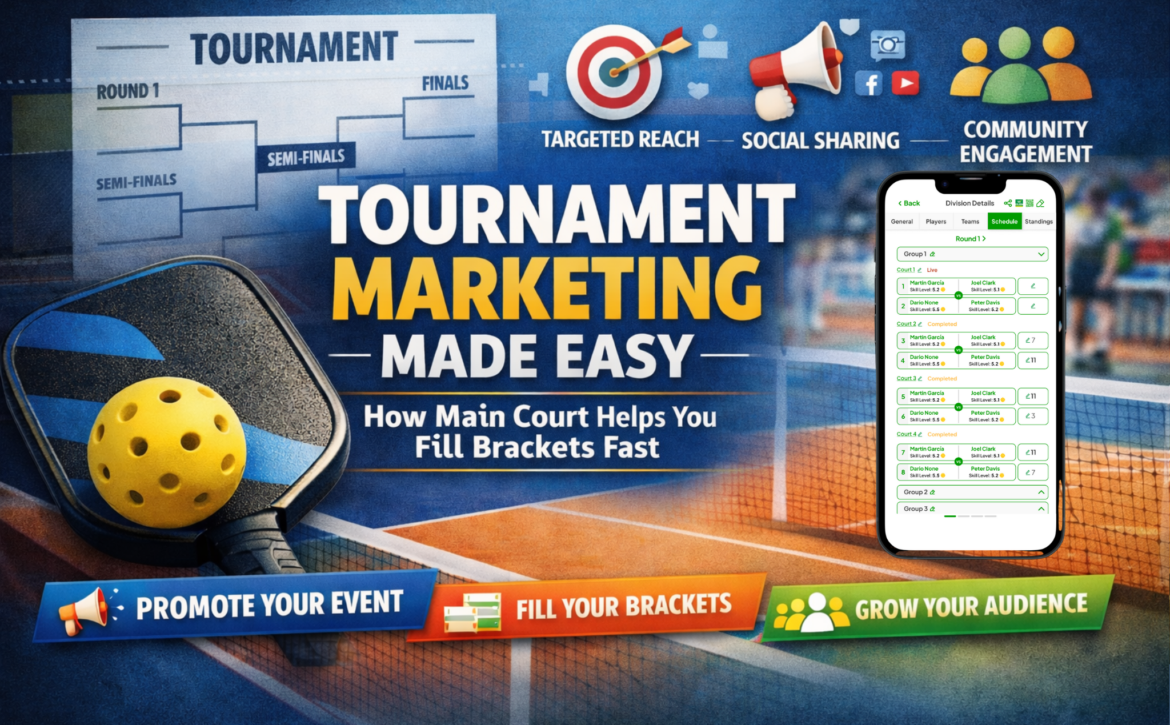
Filling tournament brackets doesn’t have to be stressful. From targeted promotion to built-in social sharing, here’s how Main Court makes tournament marketing easier and helps organizers reach the right players faster.

Learn More

How to Get Better at Pickleball

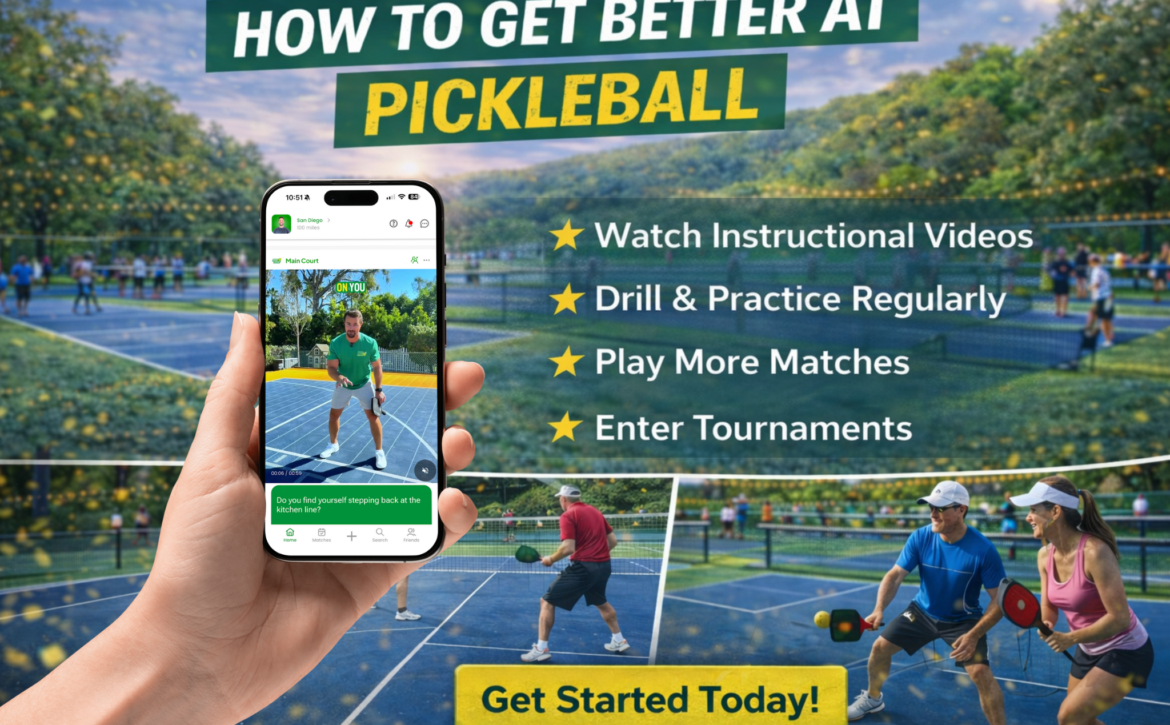
Improving at pickleball takes more than just time on the court. From drilling and studying the game to playing more matches and tournaments, here’s how to get better at pickleball and how Main Court helps players accelerate their progress.

Learn More

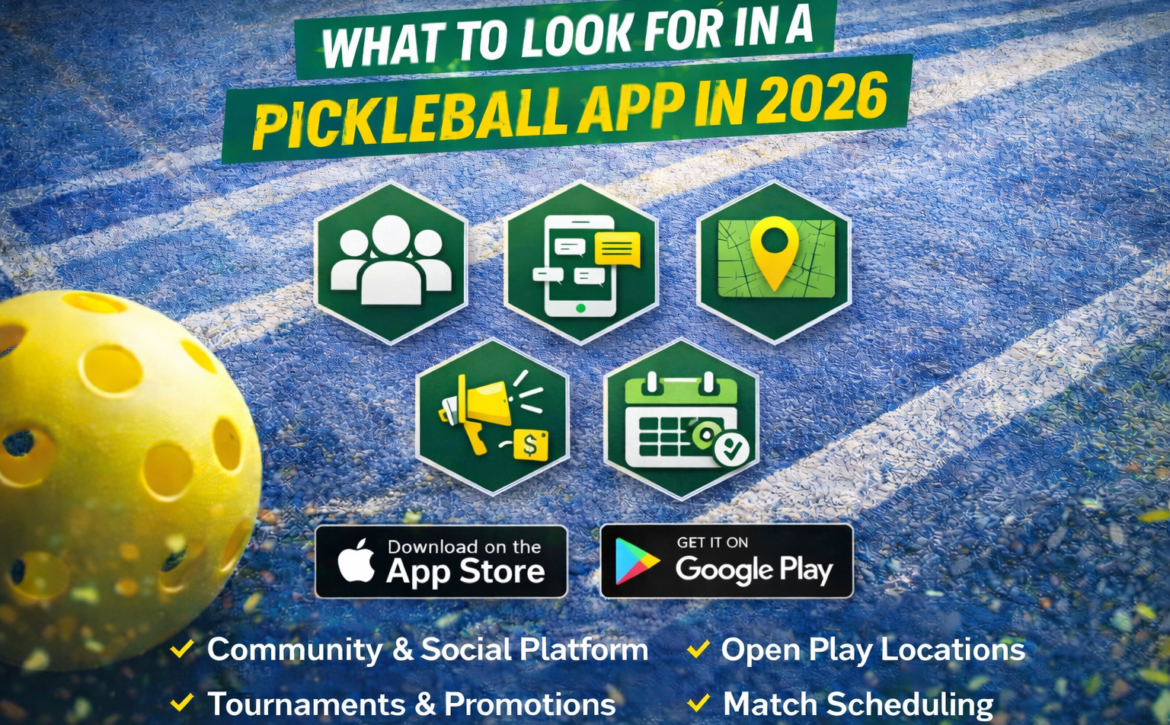
What to Look for in a Pickleball App in 2026

Choosing the right pickleball app can transform your game. From community size to open play, tournaments, promotions, and match scheduling, here’s what to look for today.

Learn More

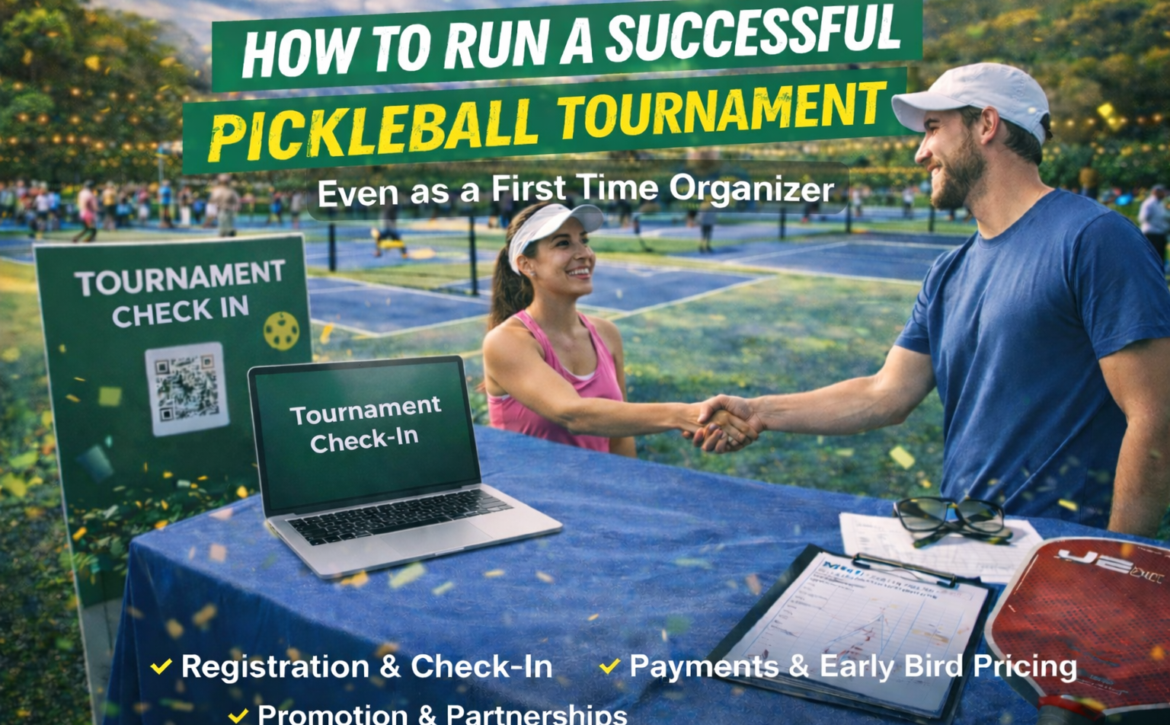
How to Run a Successful Pickleball Tournament

Running your first pickleball tournament doesn’t have to be overwhelming. Main Court handles everything from registration to check-in so you can run a successful event.

Learn More

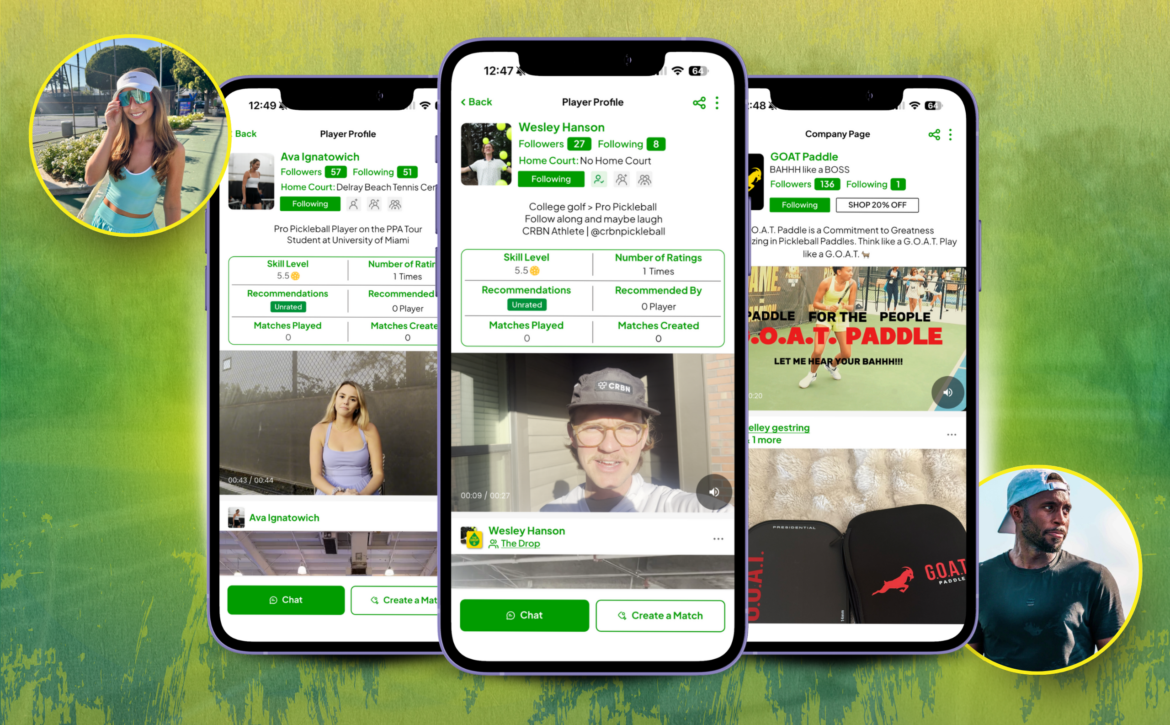
Why Content Creators Are Posting on Main Court

As pickleball creators rethink where their content truly belongs, Main Court stands out as a pickleball first platform where every view comes from real players, not algorithms or mixed audiences.

Learn More