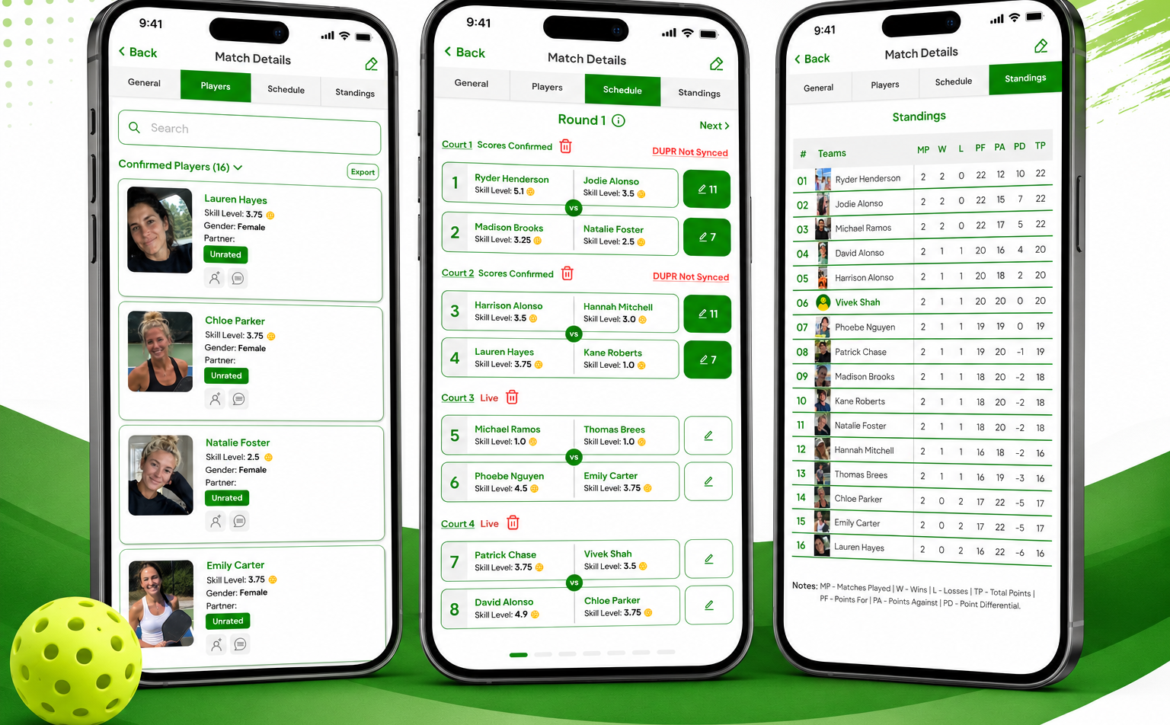
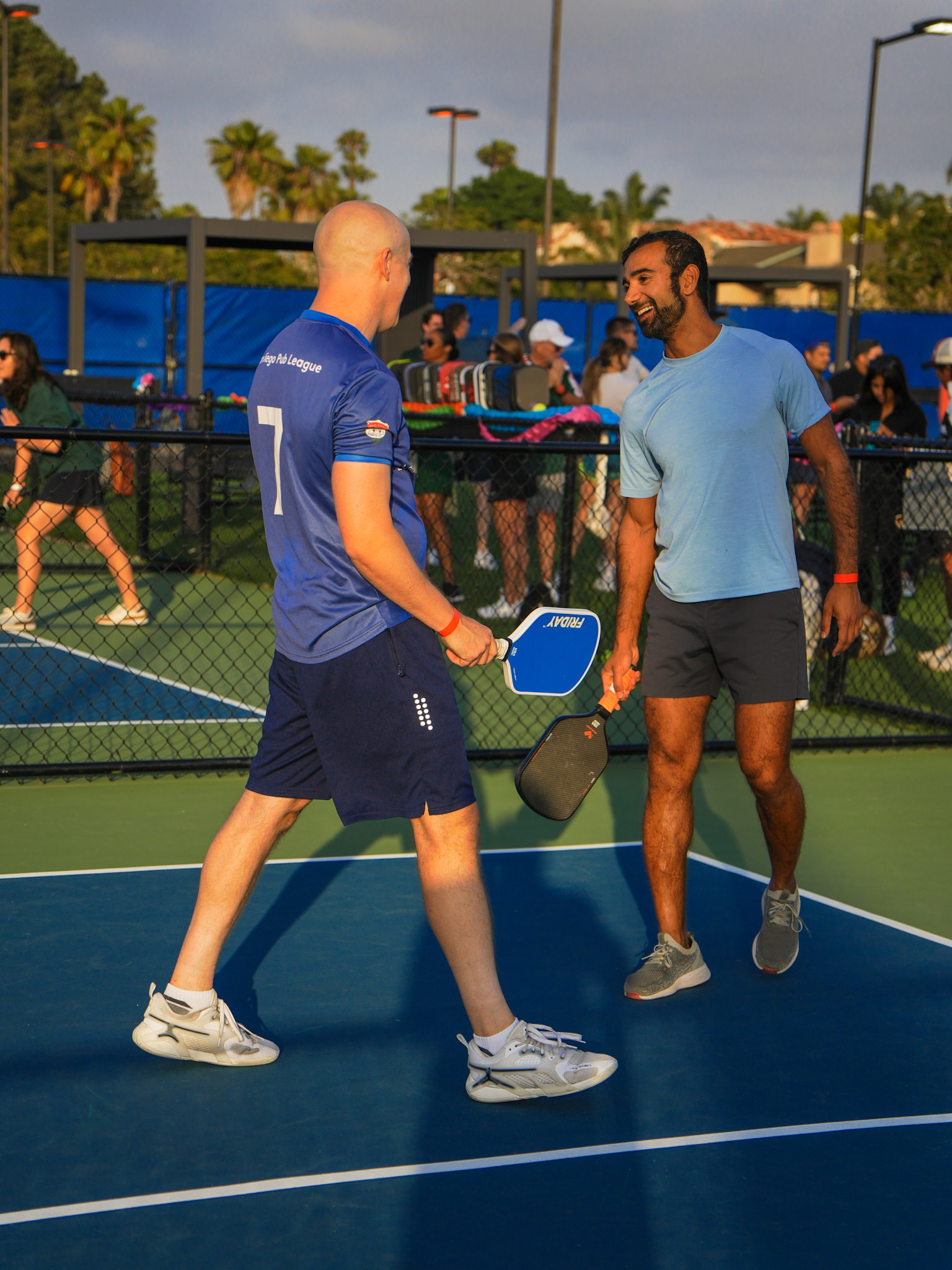
You have eight players, two courts, and ninety minutes. Everyone wants real games against different people, nobody wants to stand around, and you do not want to play referee all afternoon. The format that solves all of that is the round robin, and it is the single most useful thing an organizer can learn to run.
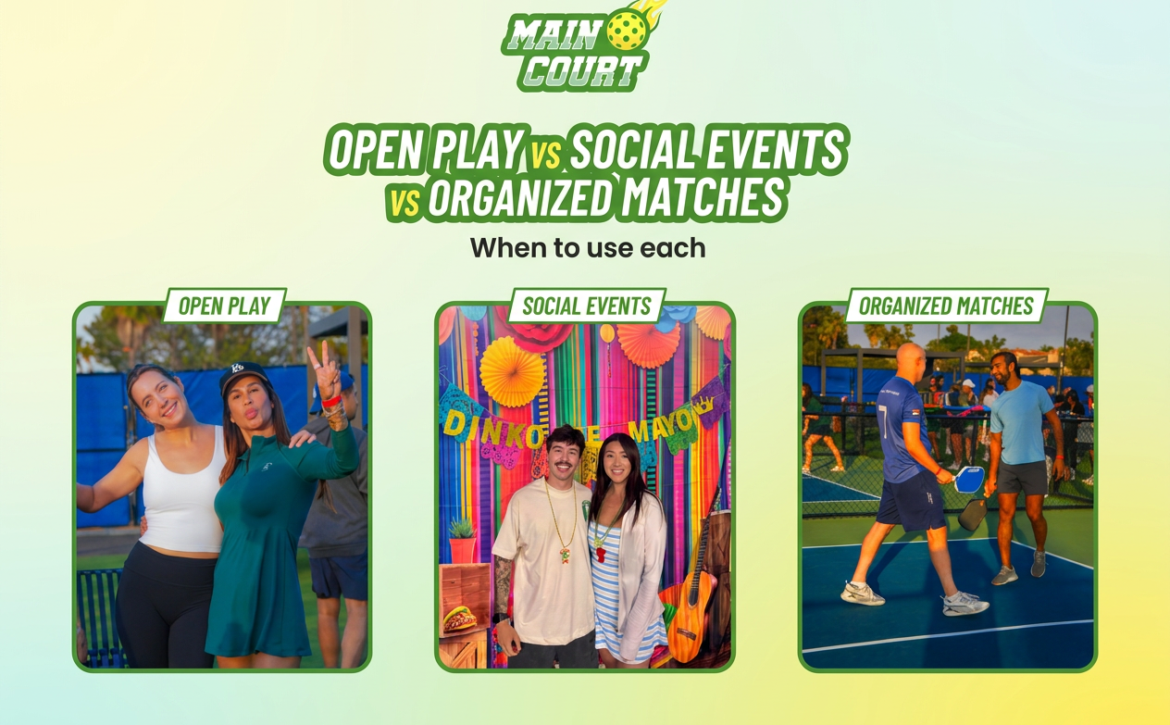
If you've been playing pickleball for more than a few months, you've probably shown up to three very different types of sessions — and walked away with three very different experiences. Open play, social events, and organized matches all go by the name "pickleball," but they serve completely different purposes. Knowing which one to join — or run — makes the difference between a great session and a wasted afternoon.
Why the Format You Choose Matters
Most players default to whatever's available — they see a court, they show up. But the format shapes everything: who you play with, whether the skill level matches, how much court time you get, and whether you leave feeling like you actually improved or just hit some balls.
The three main formats each have a job. Open play is access. Social events are connection. Organized matches are competition. When you pick the right one for what you actually want, pickleball is significantly more rewarding.
Open Play: High Access, Low Structure
Open play is the default entry point for most pickleball players. You show up to a public court or rec center, drop your paddle in a stack, and rotate in when a court opens. No reservation, no confirmed roster, no score tracking.
💡 When to use it: You're new to the sport, you want to keep moving without pressure, or you're in a new city and just need to find a court fast.
The upside is simplicity — no planning required. The downside is the skill lottery. On any given morning you might play three rallies with a beginner and then get demolished by someone who played college tennis. Neither game teaches you much.
Open play also has no continuity. You meet players, have a good game, and then never see them again because there's no mechanism to reconnect. It's a great starting point — but it has a ceiling.
Best for: Beginners, casual days, new cities, keeping active without structure.
Not ideal for: Improvement, consistent competition, building a regular crew.
Social Events: Community First, Competition Second
Social events are hosted sessions with a community focus — mixers, beginner nights, themed events, club socials. Results may or may not be tracked. The emphasis is on meeting people, not winning.
💡 When to use it: You want to expand your player network, introduce a friend to the sport, or just have fun without the pressure of competitive play.
Done well, social events are the fastest way to grow a pickleball community. Players meet people they'd never encounter at open play, make connections that turn into regular games, and leave feeling like part of something.
The key difference from open play is intentionality. A well-run social event has a host, a format (even a loose one), and a social hook beyond just hitting balls — food, music, a theme, or a charity angle. That structure is what turns a casual session into a community event.
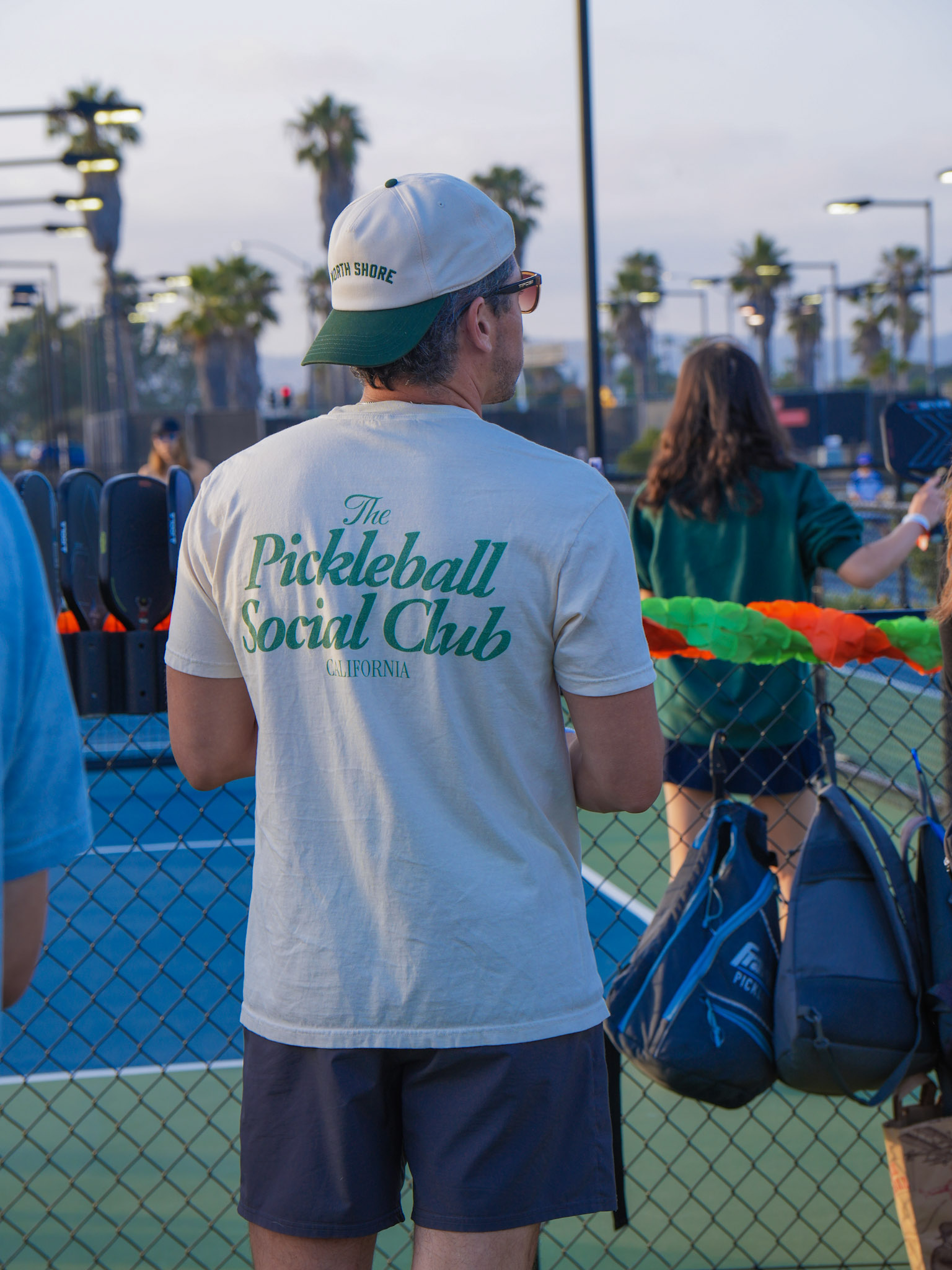
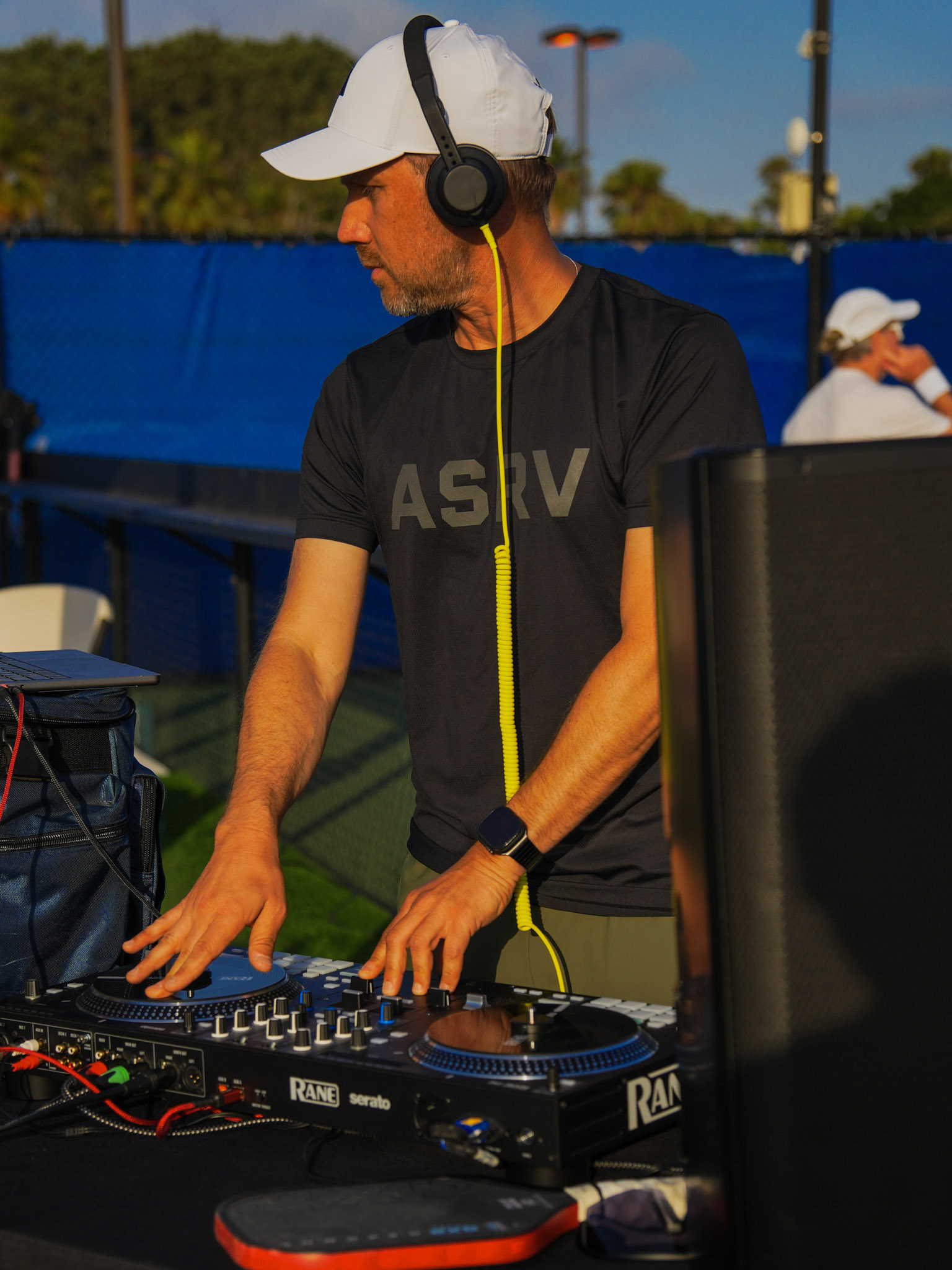
The social hook that keeps players coming back.Music, community, courts — that's a social event done right.
Best for: Meeting new players, community building, beginners, introducing friends to the sport.
Not ideal for: Competitive improvement, DUPR rating activity, skill-matched play.
An organized match is a confirmed group of players — usually 4 for doubles — playing a full scored game at a defined skill level. Everyone knows the format, everyone's playing at a similar level, and results are tracked. This is where real improvement happens.
💡 When to use it: You want to improve, play competitive games at your actual level, build a regular crew, or generate DUPR rating data. Check your skill level before filtering matches — it makes a significant difference.
Organized matches solve the two biggest problems with open play: mismatched skill levels and no continuity. Every player is confirmed before anyone shows up. Skill ranges are set in advance. And because results are tracked, you build a match history that connects you with the same players over time.
This is also the format that feeds directly into DUPR — so your regular Wednesday doubles game actually counts toward your rating, not just tournament play.
Organized matches — confirmed players, matched skill levels, real results.
Best for: Competitive improvement, DUPR activity, building a regular crew, tournament prep.
Not ideal for: Drop-in play, mixed skill levels, casual socializing without structure.
How to Choose the Right Format
Most active pickleball players benefit from all three formats at different points. Open play keeps you moving. Social events expand your network. Organized matches make you better. The mistake is using only one when you actually need something else.
How Main Court Supports All Three
Main Court is built around all three formats — not just one. You can browse and join open play sessions, RSVP to social events, or find and create organized matches filtered by skill level, all in the same app.
For organizers, each format has its own setup flow. Create an open play session and let anyone join. Set up a social event with RSVP management and a capacity limit. Or post a skill-filtered organized match with automatic confirmation, reminders, and waitlist management.
If you're tired of the group chat chaos that comes with trying to organize any of these formats manually, our post on why your pickleball group chat is killing your game breaks down exactly why a dedicated platform changes everything.
The right format for the right moment — and all of them in one place.